BMW reached a deal with workers to offer buyouts across Germany in an effort to cut about 8,000 jobs globally as sales plunge in China.
The manufacturer expects the German departures to account for most of the targeted reductions, which represent around 5% of BMW’s total workforce, according to people familiar with the matter.
It’s the latest in a series of restructuring moves by the country’s embattled auto industry.
The offer will go out to staff in research, development, planning and other corporate functions, with factory floor workers not eligible, said the people, who asked not to be identified as the plans aren’t public.
BMW also is looking to streamline its management ranks in the coming months as part of the broader cuts, they said.
BMW and its German peers are slashing expenses in response to challenges including slumping sales in China, US tariffs and high production costs in Europe.
VW is pushing to cut tens of thousands of workers and reduce capacity to stave off fast-moving rivals led by BYD.
Its Porsche unit announced a deal with labour officials this week to eliminate 5,000 jobs by 2035.
“The crisis in the automotive industry has now reached BMW as well, a company that had previously been regarded as highly resilient,” said Ingo Speich, head of sustainability and corporate governance at Deka Investment.
“The Chinese market is becoming an ever bigger problem for German carmakers.”
BMW CEO Milan Nedeljkovic and works council leaders are set to announce the voluntary reduction program during a staff-wide meeting in Germany on Wednesday, the people added.
The program begins in October and will run through 2027, they said.
A spokesman for BMW confirmed that the company has reached a deal with the works council on a restructuring program in Germany, declining to further comment.
BMW shares rose as much as 1.9% in Frankfurt. The stock is still down more than a third this year.
Nedeljkovic is looking to cut costs after a major profit warning last month. The manufacturer expects the voluntary redundancy program to boost profitability in 2028, the people said.
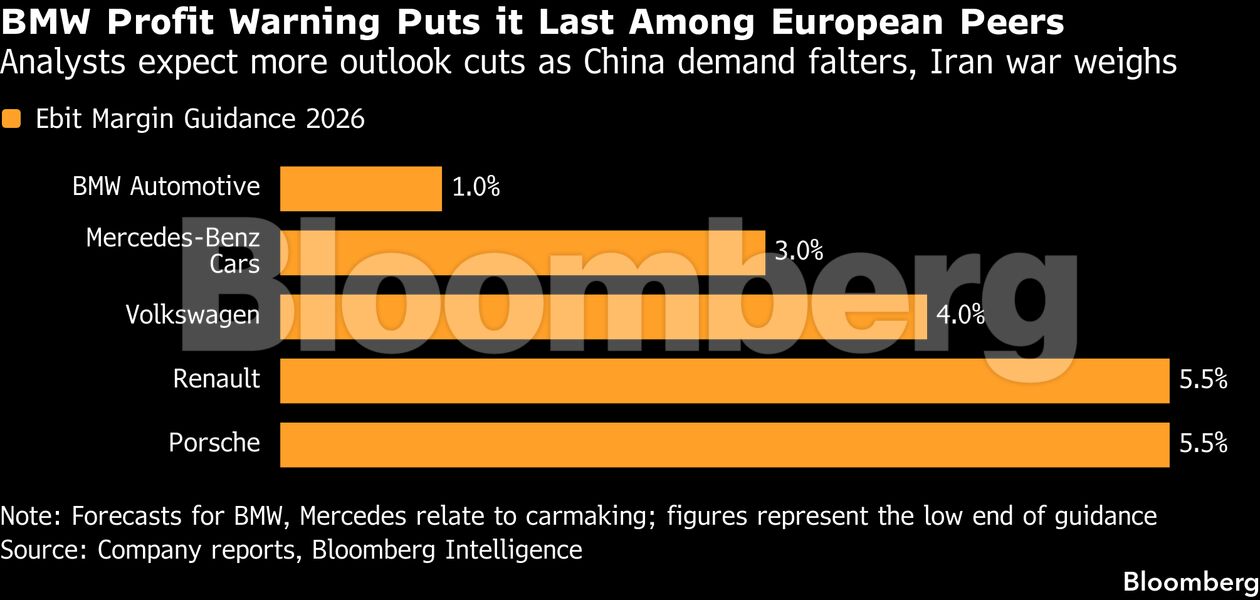
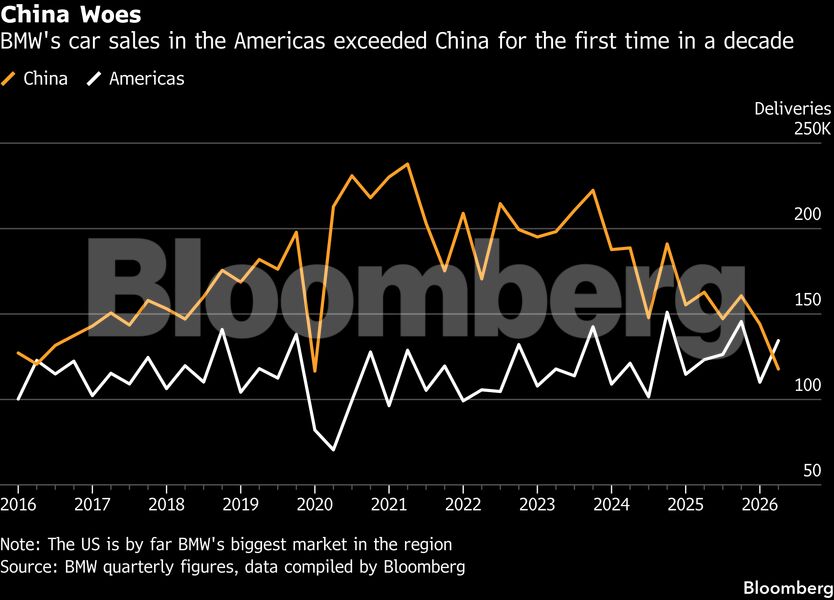
The CEO, who took over in May, is responding to a steep decline in demand in China, BMW’s largest single market.
The combination of mounting competition from local manufacturers led by BYD — especially on electric vehicles — and a property crisis is weighing on all carmakers there.
Those same rivals are now expanding in Europe.
“The Chinese are also increasing their market share here,” said Stefan Bratzel, director of the Centre of Automotive Management in Bergisch Gladbach, Germany.
“The clear directive for BMW and its peers is to become leaner, more efficient and faster.”
BMW is also facing pressure from the fallout of the war in the Middle East and US tariffs.
The company recently decided to pull out of this year’s Paris car show as it rethinks its priorities. Last month, BMW said it will intensify its existing cost reduction plans for this year.
Cutting jobs in the German auto sector is a costly process with worker guarantees usually precluding firings, so companies need to offer generous packages to reduce headcount.
BMW employed 87,436 people in Germany at the end of last year, more than half of its total global headcount. Its workforce in the country was already down 2.3% from the prior year, according to the company’s 2025 annual report.
With the voluntary program, BMW is “responding to the collapsing market in China while simultaneously working to strengthen the competitiveness of its German sites,” said Horst Ott, an IG Metall official in Bavaria and a BMW supervisory board member.
He added that the carmaker’s collective bargaining agreements remain in place.
BMW’s deal with worker groups was struck with relatively little noise.
That contrasts with the conflict at Volkswagen, where CEO Oliver Blume is gearing up for months of difficult talks with labour leaders to hammer out restructuring measures.
The VW supervisory board, where unionists hold powerful sway, earlier this month pushed back against his proposals for as many as 100,000 job cuts and the closing of four German factories.
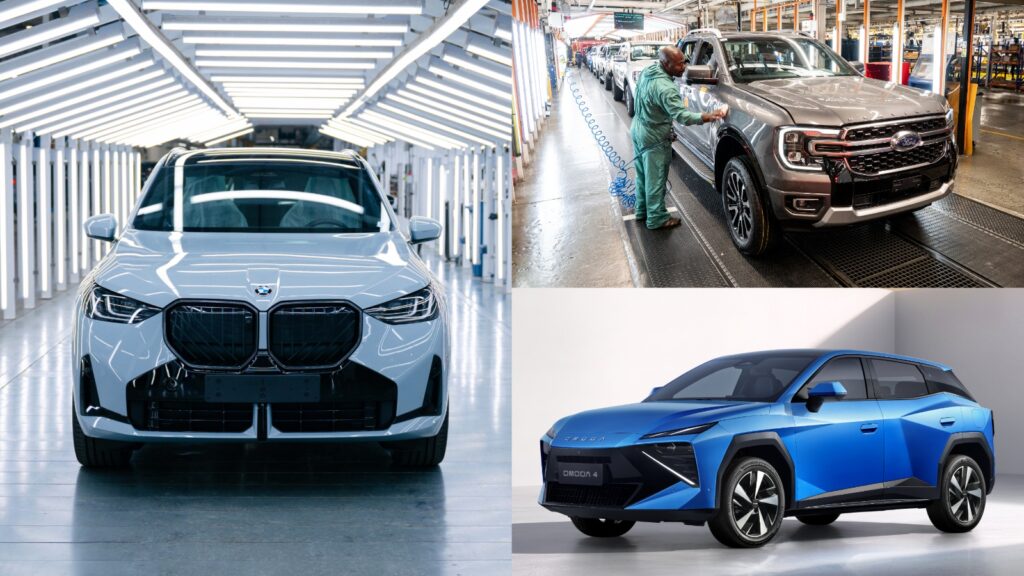
Nedeljkovic previously served as head of production at BMW. The manufacturer has invested billions of euros in recent years on its Neue Klasse platform of vehicles, which it’s now introducing around the world.
BMW is hoping that the new models will help it better compete with the likes of Tesla and Chinese carmakers.
The company is scheduled to publish detailed second-quarter results on Thursday.



 Loading ...