
New laws in Cape Town let the city impound your car for breaking these rules


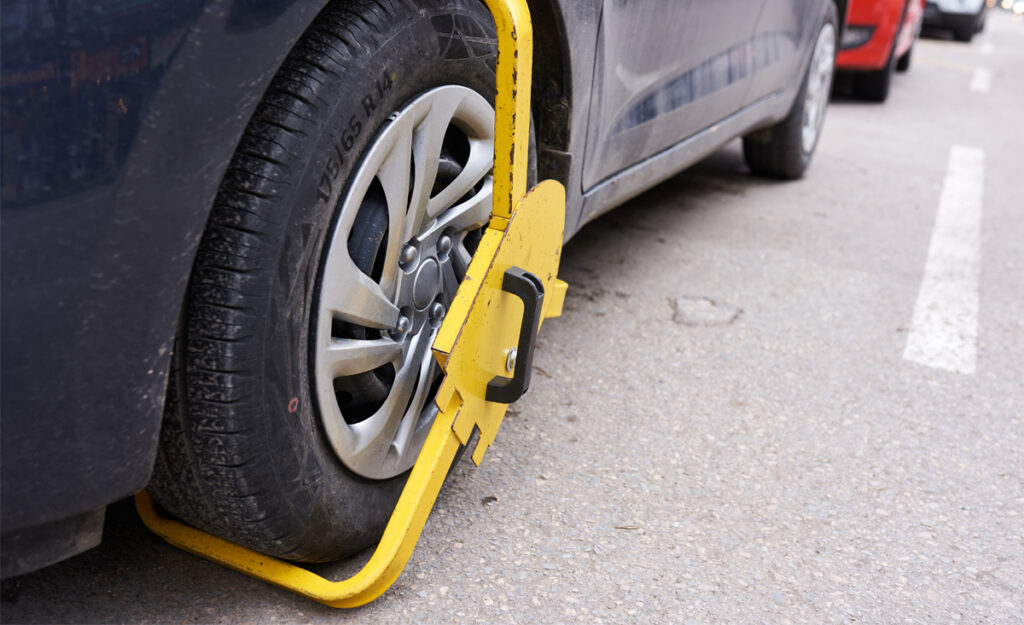
The City of Cape Town has published an amended by-law in the Provincial Gazette that outlines the provisions for impounding vehicles for various traffic infractions.
This was confirmed by Safety and Security Portfolio Committee Chairperson, Councillor Mzwakhe Nqavashe, who noted that getting the amendment published had been a lengthy process.
The amended by-law has been in the works for three years. The City’s traffic services are now finalising the administrative logistics required for enforcement.
The new provisions are centred around Cape Town’s traffic laws, focusing on penalties for driving offences, including instances where the police are allowed to impound an individual’s car on the spot.
The City highlighted several offences where it can impound motor vehicles, including:
- Reckless driving
- Illegal street racing
- Driving while under the influence
- Driving without a valid driver’s licence
- Vehicles fitted with false number plates
- Vehicles that do not have the prescribed minimum number plates
Regarding ‘reckless driving,’ the City clarified that this refers to cases where “the vehicle is being driven on a public road in a manner that is reckless and poses an immediate or imminent danger to the life of passengers, road users, or pedestrians.”
It stated that nearly 4 million traffic offences were recorded by the City’s Traffic Service over a 12-month period, from July 2025 to June 2026.
During the same period, traffic police made 2,767 arrests, a 22% increase from the 2,255 arrests made over the previous 12 months.
Additionally, drunk driving arrests increased by 32% from 1,619 over the 2024/2025 period to 2,138 over the 2025/2026 period.
“The traffic enforcement statistics and the hundreds of thousands of complaints every year are key reasons why we introduced this by-law in the first place, and then spent three years working on even tougher amendments, to address the continued lawlessness on our roads,” said Mayoral Committee Member for Safety and Security, Alderman JP Smith.
“Our Traffic Management is now working to finalise the logistics for practical implementation. To the motoring public, you have had sufficient warning. If you haven’t already changed your ways, please find alignment with the law before it’s too late.”
Fines are not enough of a deterrent

JP Smith commented on the proposed by-law amendments in 2025, noting that the stricter laws were necessary to deter the worst road offenders.
“In March, April, May, June, and July, we issued between 181,000 and 344,000 fines per month. In August, 206,000 fines were issued. Over the past six months, that comes to 1,386,247 fines, valued at about R960 million,” he said.
“Cape Town has a higher fine payment rate than the rest of the country, but fines alone don’t seem to be changing driver behaviour.”
The City has gone on recruitment drives to boost enforcement numbers, adding 200 additional traffic officers to its ranks over the last four years.
However, JP Smith said that more traffic officers will not fix the problem on its own, as there is a lack of meaningful consequences for repeat offenders.
“Your problem is that the criminal justice system is not effectively holding people to account. Fines are issued, but serving warrants on offenders is difficult. Our warrant section does good work every day, tracing people with outstanding warrants who have ignored fines and failed to appear in court.”
Minibus taxi operators were singled out as one of the worst offenders.
“Some of these drivers have up to 1,880 warrants. When they are eventually caught, the taxi owner simply replaces them with another driver who behaves the same way,” he said.





 Loading ...
-2026.10.webp)



-2026.10.webp)