


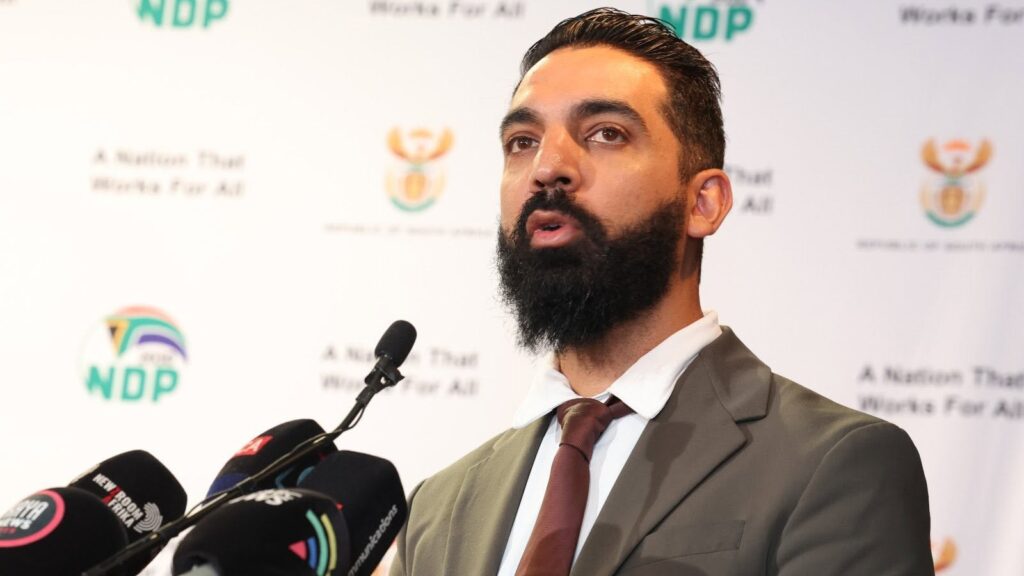
Current National Student Financial Aid Scheme (NSFAS) Acting CEO Waseem Carrim has been appointed as the new CEO of South Africa’s Road Accident Fund (RAF), effective 1 November 2026.
Carrim’s appointment was announced during the 23 September Cabinet meeting and follows an 18-month stint in a similar position at the government student bursary and loan scheme.
The NSFAS Board thanked him for his contribution to the fund, which included increasing its performance from a historical average of around 40% of annual targets over the preceding five years to 64% during the 2025/26 financial year.
“The Board wishes to express its appreciation for Mr Carrim’s leadership, professionalism and commitment during a period of significant organisational reform and transition,” it said.
“The Board wishes Mr Carrim every success in his new role and is confident that he will continue to make a meaningful contribution to the public sector and the people of South Africa.”
The new RAF CEO is a qualified accountant who earned his degree from the University of Pretoria, completing an honours degree and a master’s degree in taxation at the same institution.
According to CFO South Africa, he began his career at the university as an academic article trainee lecturing in accounting before completing his article traineeship with KPMG.
Carrim was admitted as a member of the South African Institute of Chartered Accountants (SAICA) in 2013 and joined KPMG’s Professional Practice department as a specialist in public sector accounting.
He was appointed as CFO of the National Youth Development Agency (NYDA) in 2014, and named one of the Top 35 under-35 Chartered Accountants by SAICA in 2016. A year later, he was promoted to CEO.
In March 2025, Carrim was appointed Acting CEO of NSFAS, and from 1 November he will lead the embattled Road Accident Fund amid investigations and widespread calls for it to be scrapped.
Proposal to scrap the RAF altogether

Earlier this year, the CEO of the Automobile Association (AA) of South Africa, Bobby Ramagwede, called for the RAF to be scrapped in favour of a compulsory third-party insurance system.
His suggestion came after the Department of Transport (DoT) proposed introducing a new licence disc tax to offset potential revenue losses due to the popularity of electric vehicles (EVs).
Since the RAF is funded by the Road Accident Fund Levy, a fuel tax on every litre of petrol and diesel sold in South Africa, EVs don’t contribute to the fund.
Speaking to Cape Talk, Ramagwede suggested that the idea of a new fee on vehicle licence disc renewals was laughable.
“It’s no secret. The RAF is embattled and maladministered. In fact, it collects more money than it disburses,” he said.
“Surely, by fixing its efficiencies and its operations, there’d be no reason for us to be collecting a further fee.”
Ramagwede said the department’s reasoning that EV adoption is reducing RAF’s fuel levy revenue is not good enough to introduce a new tax, especially since the fund has been mismanaged.
The Road Accident Fund receives approximately R45 billion per year from fuel taxes, yet the entity is technically insolvent with billions of rands in debt and is currently under investigation.
The Special Investigating Unit (SIU) flagged the state-run fund for corruption and mismanagement, including over R340 million in duplicate payments to law firms.
It is also investigating 10 contracts for possible irregularities and fruitless and wasteful expenditure, some of which were flagged by the Auditor-General of South Africa (AGSA).
As a result, Ramagwede questioned why motorists should continue to pay for the RAF, adding that a compulsory third-party insurance policy would achieve the same goal.
It is amid all of this turbulence that Carrim is expected to steady the ship, having already navigated the treacherous waters of the national student bursary and loan scheme.






 Loading ...
Conversation
2 commentsMusical chairs! From one maladministered enterprise to another!