
R802 million to restore a vandalised railway to one of South Africa’s biggest cities


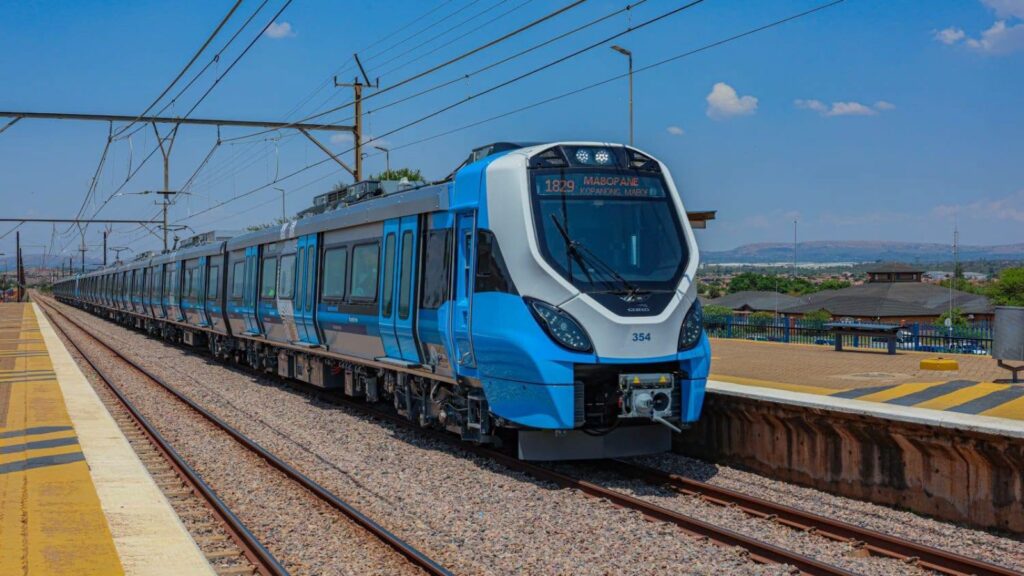
The Passenger Rail Agency of South Africa (PRASA) has invested R801.6 million to restore the Pretoria, Mabopane and De Wildt corridor, which has been extensively vandalised for years.
It spent the money on overhead electrical equipment, substations, signalling and telecommunications, including 163km of overhead equipment and the refurbishment of 14 substations.
During a visit to the line, Transport Minister Barbara Creecy said that several facilities had to be rebuilt after extensive vandalism before the electrical work could begin.
On 18 March 2019, President Cyril Ramaphosa was delayed for several hours on this very line, bringing national attention to the conditions commuters faced, and helping to drive the investment that followed.
By November 2020, a limited diesel service between Mabopane and Pretoria returned, while full service resumed in January 2022, with trips to Belle Ombre in July 2023, and further expansion since.
During the 2020/21 financial year, the Mabopane to Pretoria service ran 613 train trips, expanding to 11,144 by the 2025/26 financial year.
The Minister said that, together with Ombre, the Mabopane services delivered 17,886 train trips in 2025/26, up from 13,087 the year before, which represents growth of about 37%.
Today, the service aims for 81 daily trips, including 57 between Mabopane and Pretoria, and 24 between Mabopane and Belle Ombre, with peak Pretoria services running at 23-minute intervals.
In the 2024/25 financial year, combined Mabopane services carried approximately 5.2 million passenger trips, up to 7.1 million – growth of around 36% – in the 2025/26 financial year.
By September 2026, the combined services have recorded close to 5 million passenger trips and more than 10,400 individual train trips.
“The railway that has emerged is also more capable than before. Traction transformer capacity has increased, and upgraded feeder wires now carry more current,” Minister Creecy said.
“Together, these provide the electrical foundation for additional trains as the rest of the system is readied.”
She added that modern installations use less copper, making them less attractive to thieves, while new containment structures around transformers help guard against oil spills.
Across Gauteng, the restoration programme has completed 865km of overhead electrical equipment, recovered 51 substations and rehabilitated 187km of track.
Protecting what has been rebuilt
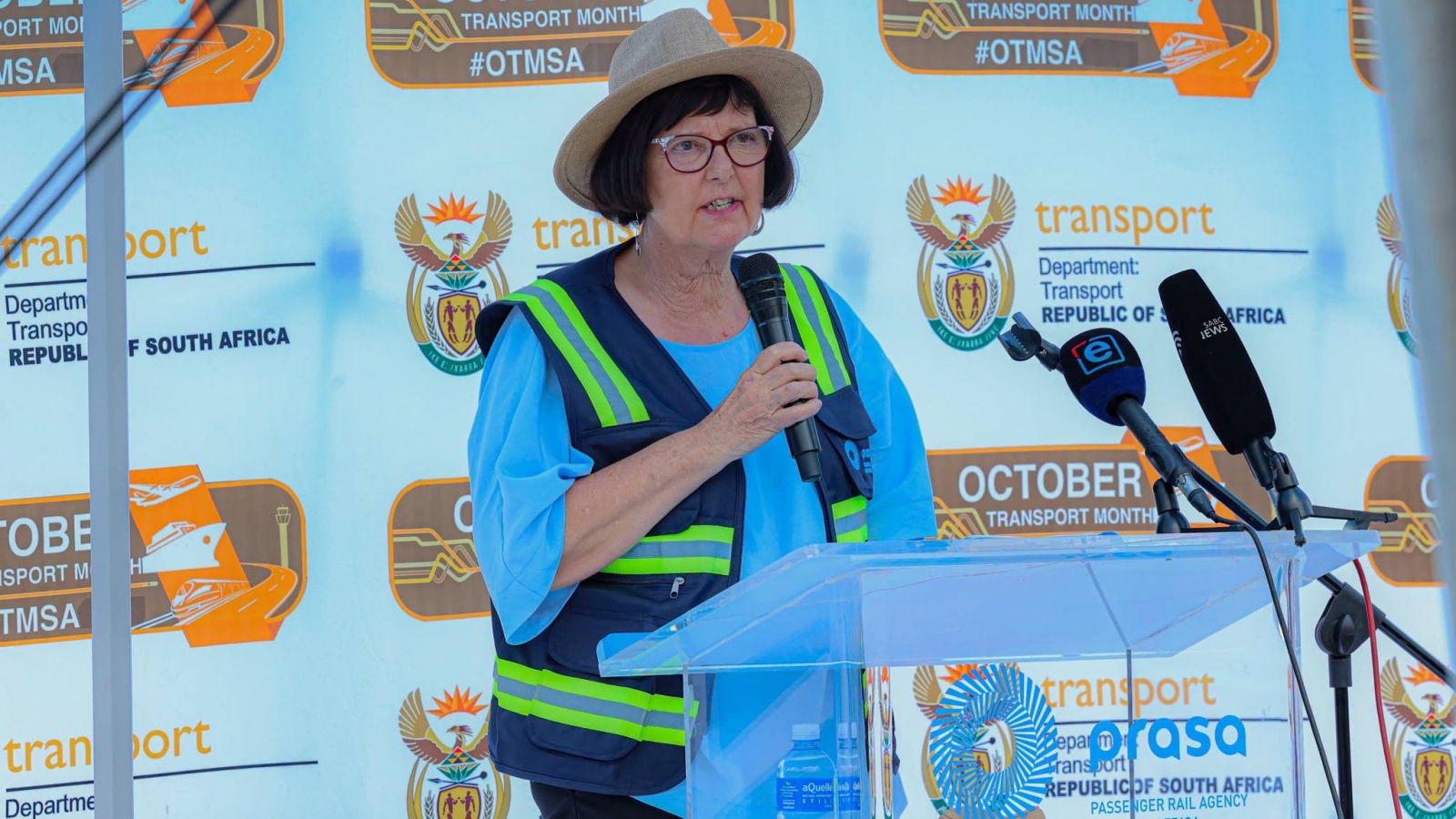
Aside from using less copper in the new installations, PRASA is building a protective barrier along the Mabopane corridor to avoid future vandalism.
The barrier combines a 3.5m concrete wall and steel mesh fencing with high-security gates and further perimeter measures.
The minister explained that three packages cover the route from Mabopane through Kopanong to Mountain View, and from Pretoria Station to Wolmerton.
“The programme spans some 58km, with a combined contract value of approximately R1.04 billion. Close to 37km have been installed, and the programme stands at about half of its overall scope,” she said.
“The walls are designed to limit unauthorised access, reduce theft and vandalism, and improve safety for passengers and staff around stations, platforms and crossings.”
While physical barriers reduce risk, they cannot remove every hazard, which is why the new barriers also lay a foundation for surveillance, monitoring and emergency response.
According to Creecy, their value depends on secure access points, surveillance, enforcement and the daily discipline of everyone who works on this railway.
“We appeal to communities to help protect this public infrastructure, and to report theft and vandalism,” said the minister.
“When equipment is stolen, the loss reaches far beyond the asset itself. Services are disrupted, public money must be spent a second time, and commuters lose a service on which they depend.”
She added that PRASA, for its part, will continue to work closely with law enforcement to act on these reports.



 Loading ...
-2026.10.webp)



-2026.10.webp)