South Africa’s Trade, Industry and Competition Department (DTIC), through the Industrial Development Corporation (IDC), is working on partnerships that could launch a locally developed car brand.
This was revealed by DTIC Minister Parks Tau in response to Parliamentary questions from MK MP Andile Mngxitama.
Tau explained that South Africa could also begin producing its own vehicle components through these partnerships.
The Minister said his department is supporting partnerships that could drive the evolution of local vehicle brands and automotive components.
“Lessons from other markets indicate that developing local vehicle brands stands a better chance of success through collaboration or partnerships with existing global brands,” he said.
Tau added that this is because existing global brands already have the technology and experience required to build vehicles, but admitted that doing so won’t be easy.
“Starting a vehicle brand requires large sums of money, billions of rands, in upfront capital, rapid technological agility, and intense global competitiveness,” he said.
In his response to Mngxitama, the Minister shared details about his department’s efforts to encourage and support local vehicle manufacturing for domestic and export markets.
“The transformation of the automotive industry to include previously excluded persons, development of local capacity, and capability to produce vehicles and components are focus areas,” he said.
“Initiatives of developing and producing local components and vehicles are and will continue to be supported within the approved policy frameworks and instruments.”
The DTIC has already proposed amendments to its auto-industry incentive programme to support local electric vehicle (EV) battery manufacturers.
These amendments were published in May 2026, offering higher production credits and customs rebates to battery manufacturers.
Proposed amendments included adding critical minerals used in battery production to a list of standard materials eligible for incentives if processed in South Africa or neighbouring states.
This would double the proportion of minerals eligible for support, unlocking more credits for manufacturers.
South Africa’s existing car factories at risk of being left behind
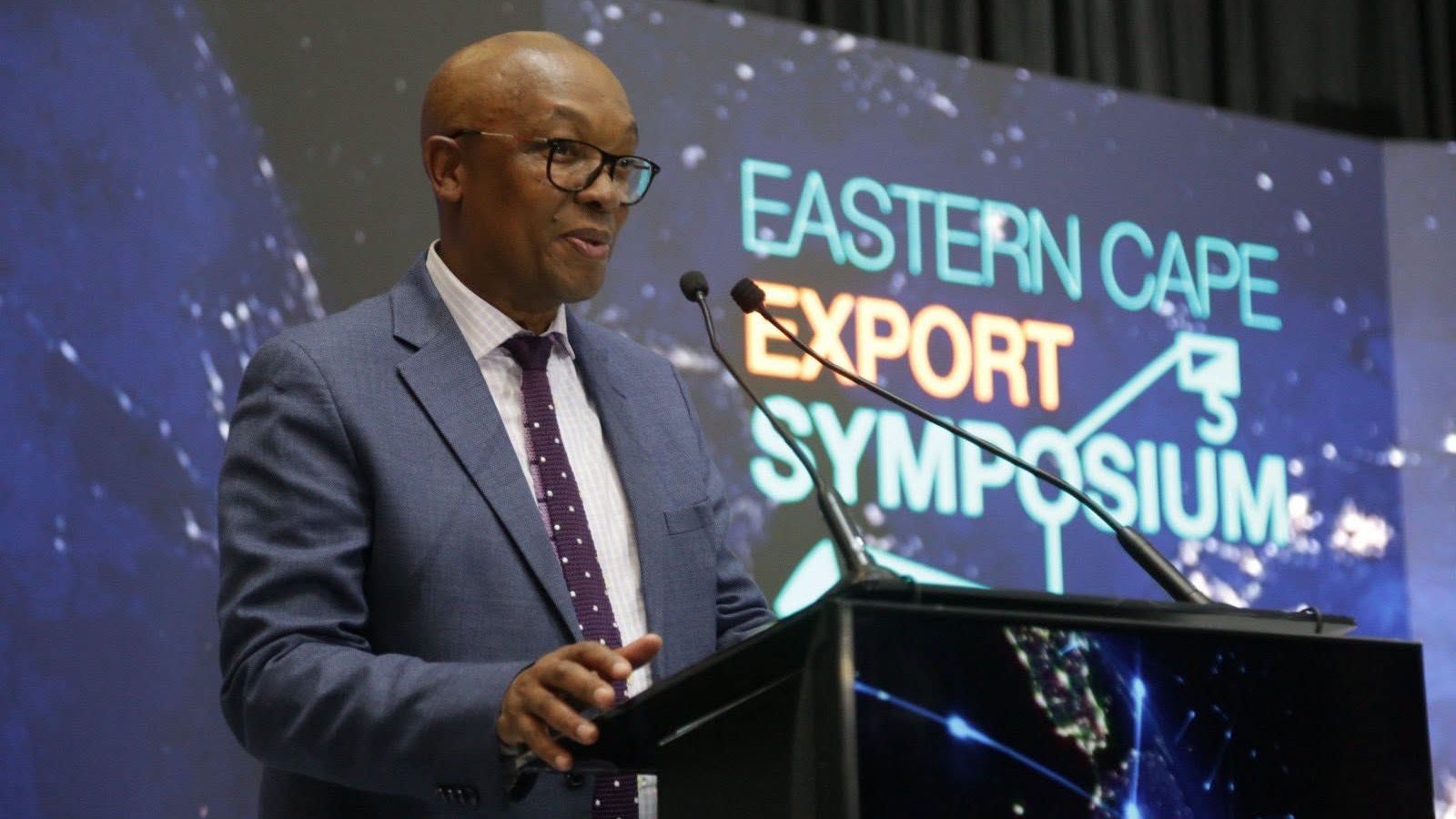
Addressing the Africa Automotive Investment Forum, Tau explained that the local automotive sector must collaborate with other African nations to reach its targets and avoid being left behind.
He explained that Africa produced about 1.23 million vehicles last year, representing only 1.3% of global production, against worldwide output of approximately 96.4 million vehicles.
Of this total, South Africa contributed 618,077 vehicles, with Morocco adding over 1 million, as the two countries accounted for more than 91% of the continent’s vehicle production.
To support this production, Afreximbank has earmarked nearly R17 billion for local content development to boost continental output to between 4 and 5 million vehicles by 2035, including new energy vehicles.
Tau explained that for Africa to build a viable and competitive automotive manufacturing sector, leading automotive economies like South Africa, Morocco and Egypt need to cooperate.
He added that this would strengthen Africa’s position in future-oriented automotive segments, including batteries, electric vehicles, and new energy vehicle value chains.
In his address, the Minister highlighted that South Africa is seeking investment across the full automotive value chain as it transitions to NEV production.
“South Africa recognises that global automotive demand is shifting towards electric, hybrid and hydrogen-enabled mobility,” he said.
According to International Energy Agency reports, electric car sales exceeded 20 million in 2025, while 2024 production reached 17.3 million units, with over 70% originating in China.
The minister noted that EVs represented about 5% of global car stock and displaced 1.2 million barrels of oil per day, adding that sales are projected to reach 55 million units by 2035.
“For Africa, this underscores the need to build capacity in EV assembly, battery beneficiation, components, charging infrastructure, grid readiness and skills,” he said.


 Loading ...