VW celebrates new milestone at its Polo factory in South Africa


VW has achieved another important milestone at its factory in South Africa, producing its two millionth Polo.
The two-millionth Polo is a Smoky Grey unit, which is destined for a customer in Australia.
Volkswagen Group Africa (VWGA) has a facility in Kariega in the Eastern Cape which has been manufacturing the iconic hatchback for nearly 30 years.
The first Polo rolled off the assembly line all the way back in 1996, meaning that the carmaker achieved its new production record just before the vehicle’s 30-year anniversary in 2026.
In its first year of production, VW put out roughly 5,460 units, and the site has been working non-stop to keep up with demand, making the Polo over the course of four model generations.
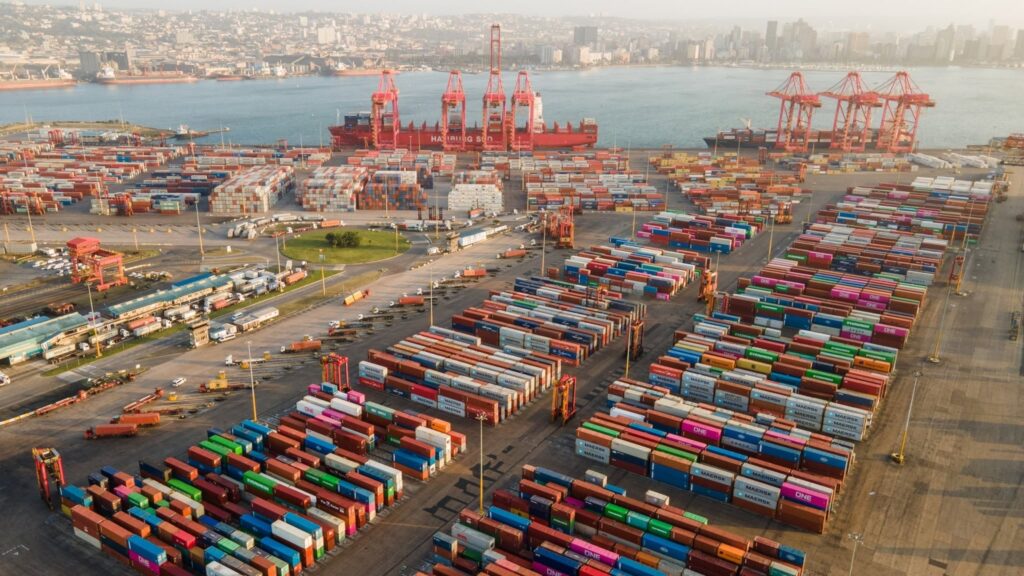
Of the two million Polos built so far, 592,840 were made for the local market, while 1,407,160 were assembled for export.
This year alone, the German automaker has already created 112,386 Polo units, illustrating the massive escalation in scale since the hatchback first went into production.
Furthermore, 8,274 of those 112,386 units were for the flagship Polo GTI, which is the only hot hatchback made in South Africa.
“This milestone underscores VWGA’s contribution to the local automotive market and economy,” said the company.
However, global demand for the Polo has waned over the last few years, particularly in markets like Europe where consumers are transitioning to hybrid and electric vehicles.
Consequently, VW shut down all of its other Polo factories last year, meaning that Kariega is now the sole producer of the small car for the global market.
“Since July 2024, plant Kariega has been the only Volkswagen plant exporting the Polo to Europe and the Asia-Pacific regions, reaching more than 30 countries.”
“Additionally, the Polo was South Africa’s most exported car last year.”
The Polo is still one of the most popular cars in Mzansi, placing in the top 20 in October with 813 sales.
“It has been a year of milestones for Plant Kariega, but achieving this one is a very proud moment for the Home of Polo,” said Ulrich Schwabe, VWGA Production Director.
“Contributing to the global success story of the Polo is a privilege for our team, and this is evident in the dedication of our employees, who have made this milestone possible.”
Polo Vivo > Polo

While the Polo is still relatively popular in South Africa, it’s not as dominant as it was a few years ago.
Since the start of the decade, there has been a major shift in local buying habits, where many households are downsizing to smaller and more affordable models.
As a result, the Polo’s sales have slowly declined while affordable models from brands like Chery, Mahindra, and Suzuki have all taken off.
Of course, VW has an answer to this trend with the Polo Vivo, which is also made in South Africa.
The Vivo is essentially the last-generation Polo, and functions as a basic entry-level model tailored for African markets.
It has been a massive success, too, as the Vivo is the best-selling passenger car in the country, moving 2,678 units in October.
The only vehicle that outsells it is the Toyota Hilux, another locally-made icon, but bakkie sales are inflated by the commercial sector, so it’s not an apples to apples comparison.
The Vivo is one of the cheapest cars in South Africa, with a starting price of R271,900, which has clearly resonated with motorists during this period of financial strain.
VW also plans to add a third car to Kariega’s assembly line, which will be a small crossover called the Tengo.
The Tengo is a model taken from Volkswagen’s Brazilian operation, which will serve as the company’s cheapest SUV when it goes on sale in South Africa.
The automaker decided to bring in the Tengo because its current entry-level SUV, the T-Cross, now costs a minimum of R399,900, putting it out of reach for most consumers.
However, it will still be some time before we see the Tengo in South Africa, as it is only scheduled to enter production in 2027.



 Loading ...
-facelift-2-2025.10.webp)
-2025.11.webp)