Tesla was supposed to launch in South Africa in 2026, but ongoing political tensions have put these plans on hold.
This is according to an insider source, which told our sister publication MyBroadband that South Africa was at the top of a list of new markets that the electric carmaker planned to debut in this year.
However, the verbal war between the United States and South Africa has cast doubts over a possible expansion into our market.
This is not the first time that Tesla has laid its sights on South Africa, as Elon Musk’s company first made plans for a local introduction back in March 2016.
A decade ago, Tesla started taking pre-orders for the Model 3 sedan – the first batch of which was expected to arrive in early 2018 after the company established an office in Cape Town.
This never came to pass, and Musk later announced that Tesla would “probably” open its doors in South Africa by the end of 2019.
The CEO, who is known to spend a lot of time on Twitter (now X), has often responded to queries from motorists on the platform.
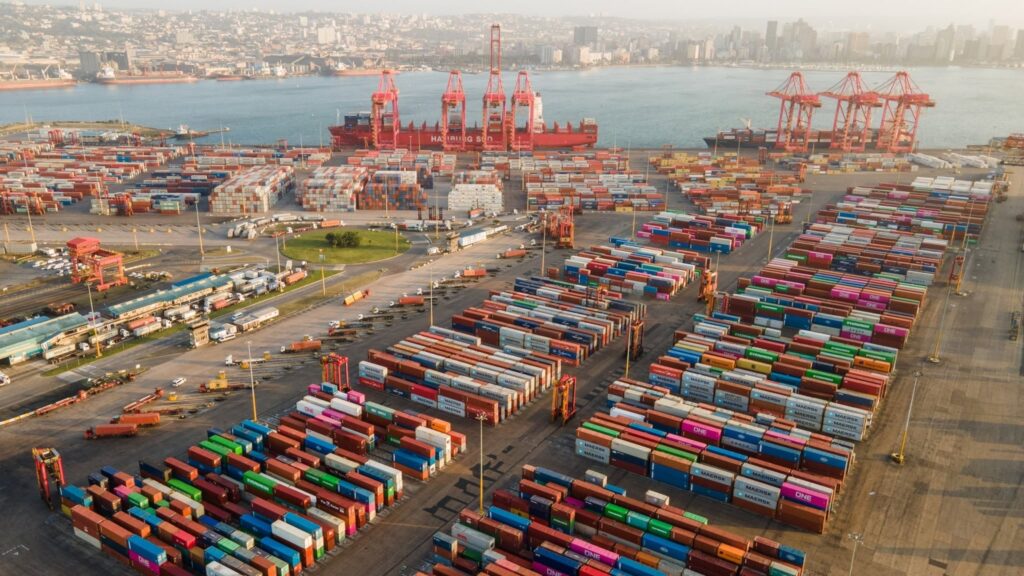
In one response, Musk attributed South Africa’s high vehicle import duties as a primary reason why Tesla still hasn’t launched in our market.
South Africa places a 25% duty on all imported vehicles with the exception of those from the United Kingdom and European Union, which only receive 18% due to a preferential trade deal.
However, this exception only applies to petrol and diesel models from the UK and EU, as electric vehicles (EVs) are subject to the same 25% duty regardless of their place of origin.
Additionally, South Africa imposes an ad valorem luxury goods duty on new vehicles.
This tax has not been adjusted in over three decades, meaning that the luxury tax now applies even to entry-level cars that now cost the same as a Mercedes sedan back in the day.
This issue is compounded for EVs, which are usually more expensive than an equivalent petrol model.
A source close to Tesla has also claimed in the past that the general state of South Africa’s EV market is another factor giving the automaker room for pause.
It’s worth noting that South Africa’s new-energy vehicle market has taken off in recent years, with hybrid and electric vehicle sales growing exponentially.
BYD leading the EV charge in South Africa

While Tesla is still hesitant to launch in South Africa, its biggest rival – BYD – has been around since 2023.
The Chinese carmaker initially launched with a single electric crossover called the Atto 3, but over time, its catalogue has grown to include the Seal sedan, Sealion 7 SUV, and Dolphin and Dolphin Surf hatchbacks.
It has also expanded its scope to include plug-in hybrids like the Sealion 5 and Sealion 6 SUVs, and the Shark 6 bakkie.
BYD even has plans to launch its luxury sub-brand Denza in South Africa in the near future.
The brand sells hundreds of vehicles in South Africa every month, indicating that new-energy vehicles are a viable market.
Tesla isn’t the only EV competitor BYD has to keep an eye on, mind you, as other Chinese carmakers like Chery, GWM, and Geely are looking to expand their electric sub-brands in our market.


 Loading ...
-facelift-2-2025.10.webp)
-2025.11.webp)