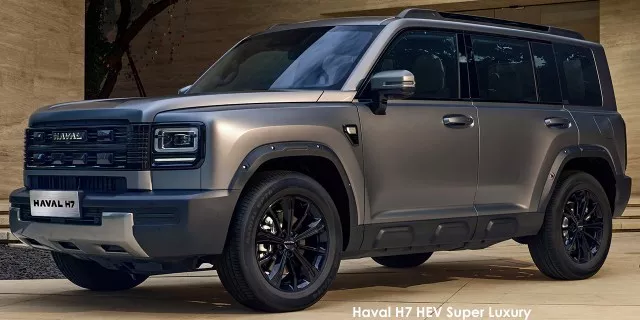
Nissan is set to sell its Rosslyn factory to Chery, marking the end of more than 60 years of manufacturing in South Africa.
In January 2026, Nissan South Africa announced that it had entered an agreement with the Chinese automaker to hand over the keys to its Navara bakkie factory and its adjacent stamping facility.
“Nissan and Chery SA have reached agreement on the acquisition of Nissan’s manufacturing assets in Rosslyn, South Africa,” said Nissan.
“Subject to the fulfilment of certain conditions, including regulatory approvals, Chery SA will purchase the land, buildings and associated assets of the Nissan facilities in mid-2026.”
This acquisition has since been given the green light, as the Competition Commission announced on 19 June that it had recommended approval of the transaction, subject to conditions relating to employment and local supply.
The Commission said that Chery South Africa intends to acquire the manufacturing assets at the Rosslyn facility and use the plant to produce selected Chery SUV models locally.
“The Commission is of the view that the proposed transaction is unlikely to substantially lessen or prevent competition in any market. Regarding public interest, the merging parties tendered conditions relating to employment and local supply,” it said.
Nissan said that the decision to sell the plant was motivated by external factors affecting the site’s utilisation and long-term viability.
The Japanese carmaker is in dire financial straits and has been pursuing multiple strategies to salvage its business.
It previously attempted to merge with Honda, but formal talks between the two manufacturers fell through in February 2025, as Nissan would have been reduced to a subsidiary under the new agreement, and leadership wanted to maintain the company’s independence.
Nissan has also closed several factories worldwide, including two sites in its home country, and leadership has greenlit the development of new vehicles to help the company regain market share.
In South Africa, the decision to sell the Rosslyn plant is viewed as the best course of action to protect jobs and ensure the multi-billion-rand asset remains in use.
“Nissan has a long and proud history in South Africa and has been working to find the best solution for our people, our customers and our partners,” said Jordi Vila, President of Nissan Africa.
The sale marks the end of a major chapter for Nissan South Africa, which has a history dating back 60 years.
In 1966, the company began assembling vehicles from complete knock-down kits. It later established its Rosslyn manufacturing plant in 1973.
Over the decades, the facility has pumped out popular models like the NP300 Hardbody, the NP200, and the Navara.
The half-tonne NP200, launched in 2008, was a smash hit with businesses and was one of the country’s top-selling bakkies until production ended in 2024.
Nissan also entered the minibus taxi scene in 2014 with the NV350 Impendulo, and the current-gen Navara first rolled off the assembly line in 2021, following a R3-billion investment in the factory.
However, while Nissan’s products have generally been well received, the company has gradually lost market share due to its ageing lineup and an influx of new competitors, particularly from Chinese and Indian brands.
Nissan will continue to operate in South Africa
While Nissan is selling its Gauteng factory, the company has firmly stated that this is not the end and that it will continue to do business in South Africa.
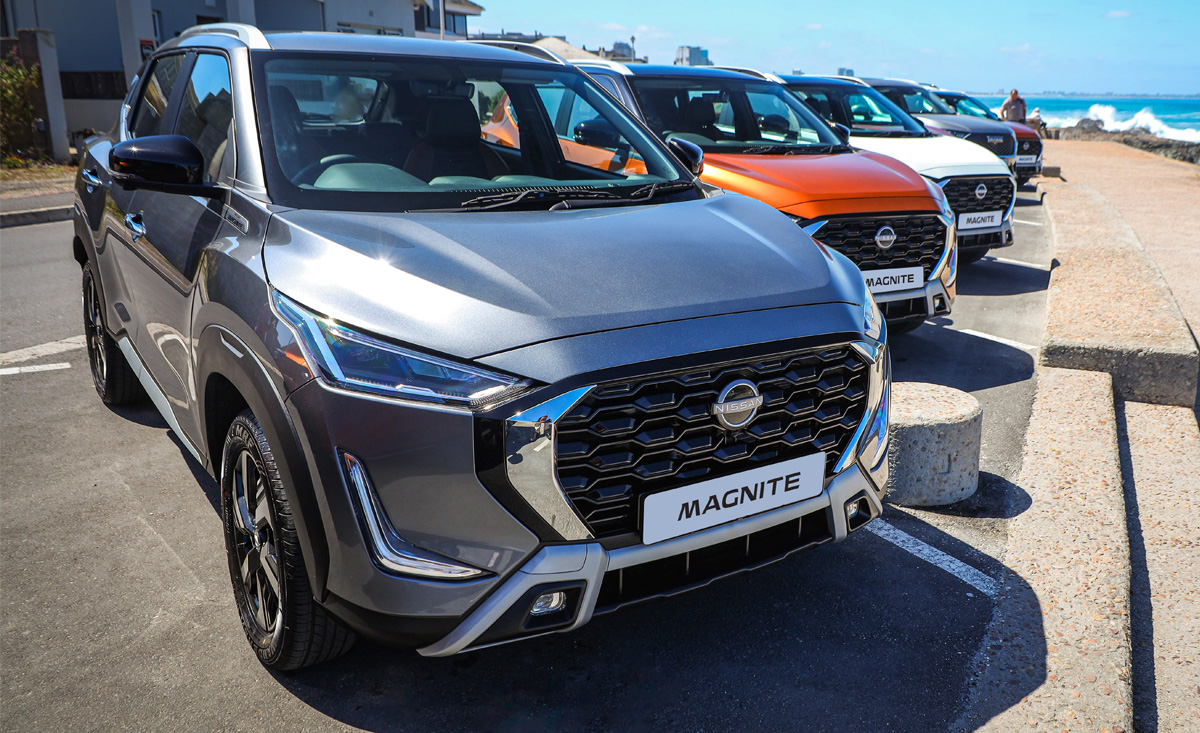
Once the takeover is complete, Nissan will operate as a vehicle importer, selling models like the Magnite crossover, X-Trail SUV, and the current-gen Navara single cab and double cab.
Unfortunately, the next-gen Navara, which was unveiled in January, will be exclusively sold in Australia and New Zealand, and the company has provided no indication that it is under consideration for our market.
On the other hand, Nissan has confirmed that two other models are in the pipeline for South Africa later this year.
One is the new, seventh-generation Patrol SUV, while the other is the Tekton, an Indian-made crossover that shares a platform with the Renault Duster through the Renault-Nissan-Mitsubishi alliance.



 Loading ...