


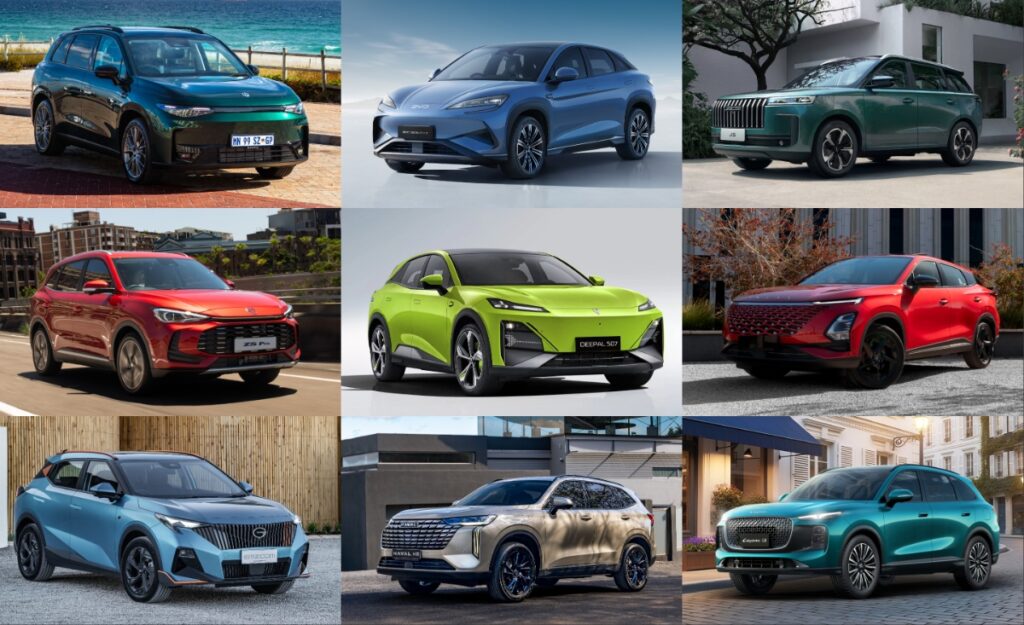
Since the turn of the year, Chinese car brands in South Africa have recorded tremendous growth, as the local appetite for affordable vehicles with premium features continues to grow.
These carmakers recorded monthly sales increases in nearly every month throughout the first half of 2026, increasing monthly sales totals by nearly 22% from January to June.
In January, Chinese brands reported 9,198 new passenger vehicle and bakkie (LCV) sales to the Automotive Business Council (Naamsa), rising to 11,217 units by June.
These being GWM, Chery, Jetour, Omoda & Jaecoo, BYD, MG, BAIC, Changan, JAC, Foton, and LDV.
| Month | Combined Chinese passenger & LCV sales | Month-on-Month change |
|---|---|---|
| January | 9,198 units | — |
| February | 9,506 units | +3.35% |
| March | 10,733 units | +12.91% |
| April | 10,404 units | -3.07% |
| May | 10,994 units | +5.67% |
| June | 11,217 units | +2.03% |
April was the only month where Chinese brands collectively saw a dip in sales, though it did little to impact the overall upward trend.
The April drop is notable, as it was the only month the broader new-vehicle market slipped this year.
| Month | Total industry local passenger vehicle and bakkie sales | Industry MoM change |
|---|---|---|
| January | 48,186 units | — |
| February | 50,794 units | +5.41% |
| March | 54,927 units | +8.14% |
| April | 45,380 units | -17.38% |
| May | 48,122 units | +6.04% |
| June | 51,564 units | +7.15% |
Even though April saw a minor month-on-month (MoM) drop in absolute unit sales for Chinese brands, it was actually their most dominant month in terms of market share – spiking to 22.93% of the local market.
This coincided with the broader automotive industry suffering a massive 17.38% MoM crash in April, whereas Chinese passenger and LCV brands proved more resilient, slipping by only 3.07%.
In the passenger and bakkie market, Chinese brands rose from 19.09% market share in January to a 22.93% peak in April.
This means nearly one in four consumer vehicles sold in South Africa in April was a Chinese brand, and by June, this number stood at 21.75%, highlighting these brands’ rapid rise in popularity.
| Month | Total industry passenger vehicle and bakkie sales | Chinese brand local passenger vehicle and bakkie sales | Consumer segment market share |
|---|---|---|---|
| January | 48,186 units | 9,198 units | 19.09% |
| February | 50,794 units | 9,506 units | 18.71% |
| March | 54,927 units | 10,733 units | 19.54% |
| April | 45,380 units | 10,404 units | 22.93% |
| May | 48,122 units | 10,994 units | 22.85% |
| June | 51,564 units | 11,217 units | 21.75% |
It should be noted that this market share may be more, since some Chinese automakers, including Geely, GAC, iCaur, and Lepas, have not yet started reporting their local sales figures to Naamsa.
The Chinese brands responsible for the 2026 figures
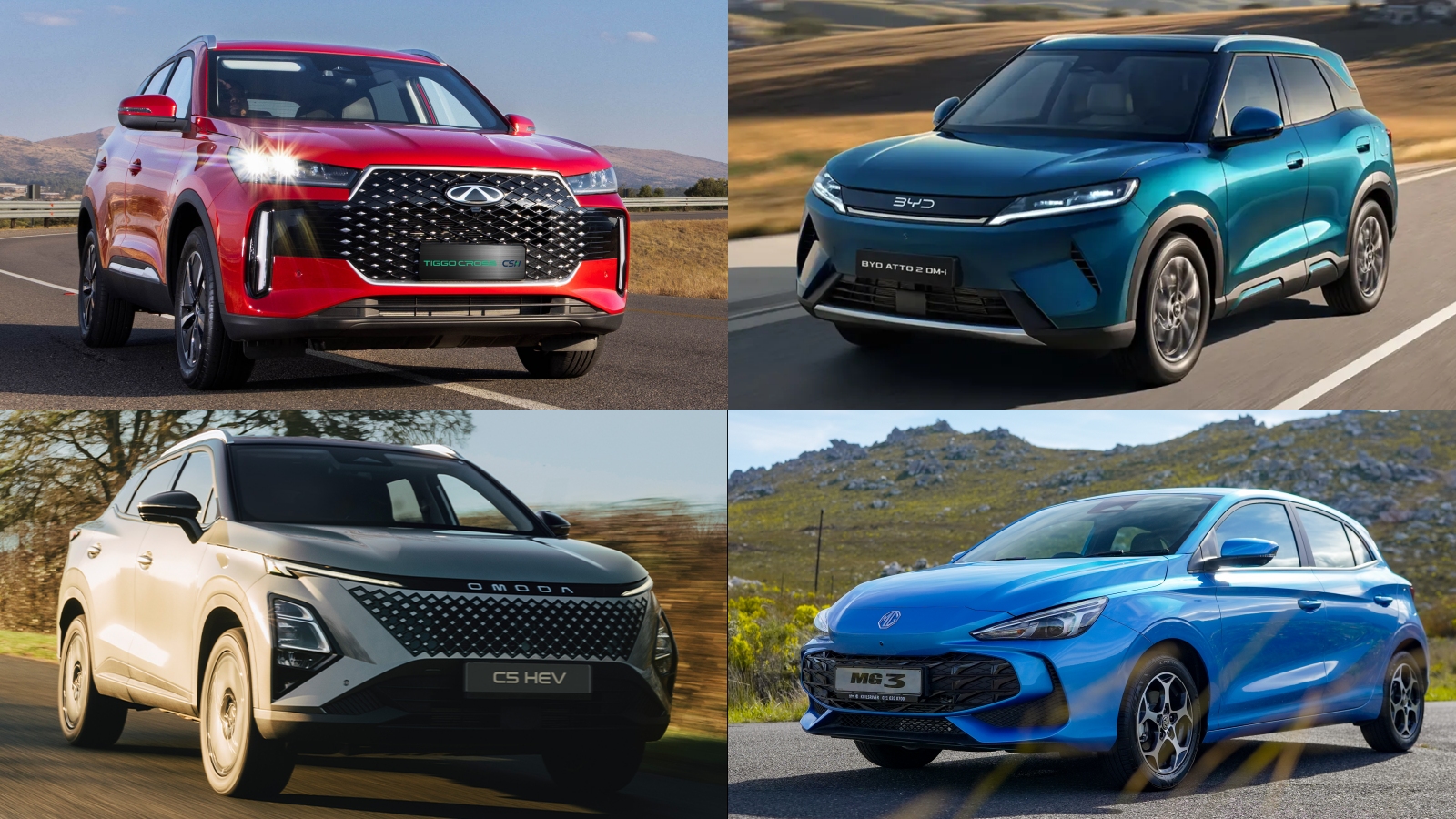
Because some brands do not report their local sales data to Naamsa, the ones that do take responsibility for setting the tone for Chinese new car sales in South Africa.
Their combined volume growth was driven by two key players – BYD, and the Chery Group – which enjoyed uninterrupted sequential monthly growth.
Arguably, the biggest contributor of the three was BYD, which had not reported its sales until March, debuting with 589 units and steadily expanding its local footprint month-on-month to 800 units in June.
The second-biggest individual carmaker in South Africa – Chery – remained consistent in its growth so far this year, maintaining an unbroken upward trajectory across the entire first half of the year
It started by selling 2,258 units in January, climbing to 2,312 in February, 2,390 in March, 2,462 in April and 2,569 at the end of May, before peaking to 2,602 units in June.
Jetour, a Chery Group brand that reports its sales separately, enjoyed an equally impressive streak, recording uninterrupted sequential growth from 1,550 units in January to 2,054 units in June.
While the overall narrative surrounding Chinese brands is one of rapid expansion, some brands faced setbacks or struggled with volatility.
GWM, despite remaining the highest-volume Chinese brand in the local market, hit a bottleneck in the second quarter of the year.
It climbed from 2,521 units in January to a peak of 2,777 in March, before dropping by nearly 10% to 2,485 in April, and in June was close to being overtaken by close rival Chery.
While most of Chery’s sub-brands have excelled so far this year, Omoda & Jaecoo experienced a volatile half-year, launching with 1,413 units in January but falling to 1,297 in February.
Although it recovered to 1,433 in March, it slid again through April and May before ending June at 1,416 units, or nearly identical to where it began the year.



 Loading ...

-2026.09.webp)