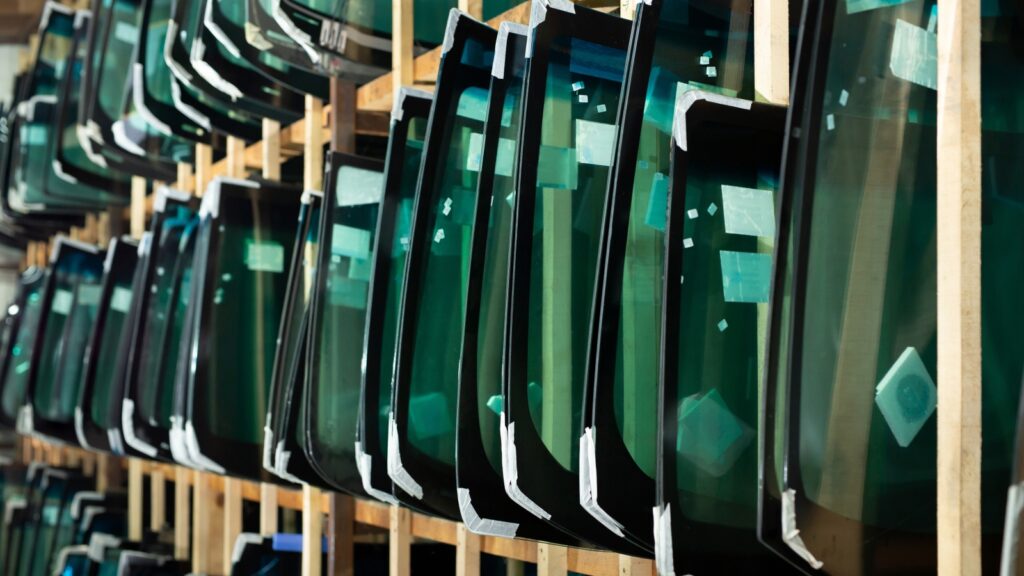
The taxman is cracking down on “tariff hopping” and “country hopping” practices by aftermarket automotive replacement windscreen importers based in China and Malaysia.
The South African Revenue Service (SARS) has imposed higher tariffs on these imports following an investigation by the International Trade Administration Commission of South Africa (ITAC).
Local windscreen manufacturer Shatterprufe called for investigations into whether anti-dumping duties imposed on aftermarket windscreens imported from China were being evaded through tariff misclassification.
Original anti-dumping duties ranging from 12.92% to 129.15% were imposed on aftermarket vehicle windscreens.
Shatterprufe alleged that importers and Chinese manufacturers circumvented these anti-dumping duties by declaring imported windscreens under an alternative tariff subheading, not subject to anti-dumping measures.
It also alleged that manufacturers and importers evaded anti-dumping duties by shifting windscreen sourcing from China to related manufacturing subsidiaries in Malaysia.
ITAC’s investigations, which were initiated on 7 March 2025, found that imports under the anti-dumping tariffs dropped by 62%, while imports under those not subject to anti-dumping measures increased 16%.
It said that this demonstrated a clear shift in declarations to avoid duty burdens, which the commission confirmed through on-site verifications.
Additionally, following the imposition of provisional anti-dumping duties on Chinese glass, imports from Malaysia surged from 333kg to 325,578kg by 2024, capturing a 13% market share.
Following its investigations, ITAC recommended that the Minister of Trade, Industry and Competition extend the existing anti-dumping duties on windscreens to other tariff subheadings.
As a result, SARS has extended the anti-dumping duties to three Chinese aftermarket automotive replacement windscreen manufacturers.
ITAC recommended that all other Chinese windscreen exporters be subject to 129.15% tariffs and that imports be placed under Schedule 2 of the Customs and Excise Act so they cannot be imported under rebate without explicit approval.
South Africa has a Chinese automotive parts dumping problem

Last month, the South African Tyre Manufacturers Conference (SATMC) highlighted the threat that cheap tyres imported from China pose to local manufacturers.
These tyres have followed Chinese cars to South Africa, with more than 40% of all brands on sale in our market now originating in the Far East.
Dozens of Chinese car brands operate locally, with many more launching within the last three years, including GAC, BYD, Changan, Foton, Geely, Omoda, Jaecoo, Jetour, JMC, MG, Lepas, and iCAUR.
According to SATMC managing executive Nduduzo Chala, because these manufacturers import their cars as completely built-up units, they are coming in on Chinese tyres.
Speaking to CapeTalk, Chala encouraged South Africans to replace these tyres with locally made ones when the time comes to replace them.
He added that motorists prefer to replace tyres with the same brand, making it easier to sell locally made tyres if cars are already equipped with them.
“[Local tyres] have got benefits other than to say you are fitting premium tyres. It’s also got an effect on jobs, sustainability, and local sourcing that goes beyond that local manufacturing,” he said.
Because South Africa’s auto sector has been flooded with Chinese tyres in recent years, many factories have had to shut down their production lines.
In June 2025, Goodyear closed its production facility in Kariega in the Eastern Cape, citing cheap imports from Asian markets as one of the main reasons.
Goodyear’s closure came only a few months after ContiTech, a subsidiary of Continental Tyres, announced its intention to shut down its operations in Kariega, according to Daily Investor.
Bridgestone followed, closing its plant in Gqeberha in November 2020, though it still operates a factory in Brits in the North West.
The pressure on South Africa’s manufacturing sector prompted ITAC to impose anti-dumping duties on imported tyres, but these measures have done little to curb the problem.

 Loading ...