One reason why South Africa’s zero-alcohol law won’t work


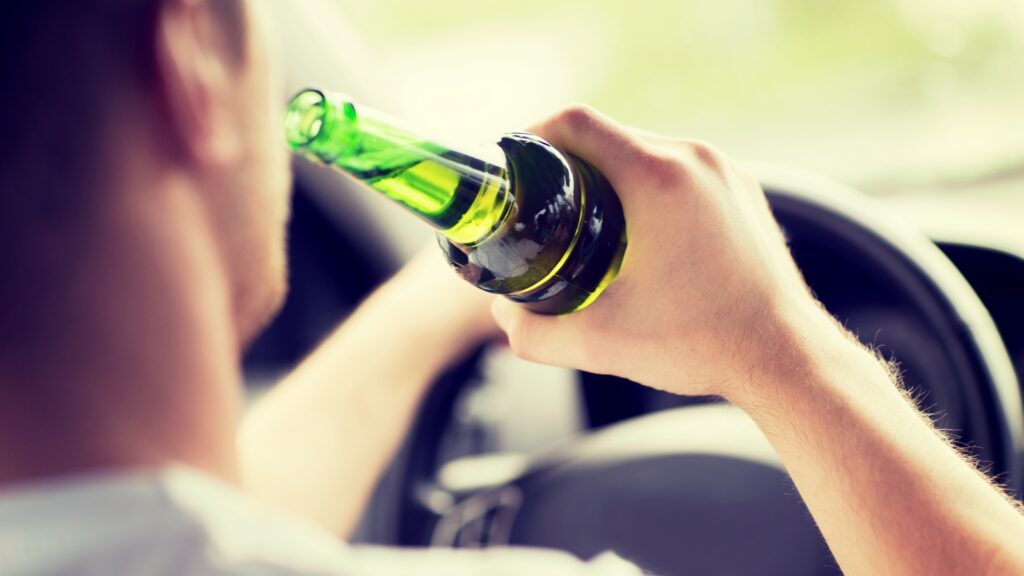
The South African government seems adamant that it can amend Section 65 of the National Road Traffic Act to lower the driver blood-alcohol concentration (BAC) limit to zero, but many believe the attempts are futile.
One such critic is Prof Hennie Klopper, Emeritus Professor at the University of Pretoria and a legal practitioner at HB Klopper in Pretoria, who told TopAuto that the big problem is not the BAC but enforcement.
Klopper, who extensively researched it, explained that the conviction rate for driving under the influence (DUI) in South Africa is only 7%.
In 1996, the permitted BAC for driving was reduced from 0.08% to 0.05%, but Klopper noted that this did not affect road traffic crash (RTC) casualties.
“The effect of a BAC lower than the current 0.05% on driving ability is virtually immeasurable,” he explained.
“The proposed change may also expose innocent, law-abiding South African citizens to unwanted harassment and arrest.”
That is because several factors may cause false-positive BAC results, including asthma medication, over-the-counter medications, oral gels used to treat toothache and some mouthwashes and breath fresheners.
Other reasons for false-positive tests include medical conditions such as acid reflux and diabetes, recent dental work and, very rarely, auto brewery syndrome.
Klopper listed foodstuffs that contain trace amounts of alcohol and cause a BAC over the absolute zero limit, including ripe fruit, protein bars, alcohol-containing hot sauces, sugar-free gums, white bread, and vanilla extract.
Instead of lowering the limit to zero and opening the door for far-reaching consequences, Klopper suggests what is actually needed is zero-tolerance traffic law enforcement.
This, he said, needs to be backed by effective prosecution of offences, and not more legislation such as AARTO, which international research has shown is only effective if backed up by education and law enforcement.
While Klopper does not agree with lowering the tolerated BAC limit, he does acknowledge that South Africa’s road traffic crash problem, which costs our economy more than R20 billion a year, needs urgent attention.
One step closer to implementation

Despite widespread concerns from automotive industry stakeholders, like Drive.co.za director Rob Handfield-Jones, Transport Minister Barbara Creecy said the government’s plan is getting closer to implementation.
Handfield-Jones highlighted how this amendment could result in penalising those with a metabolic syndrome that causes their bodies to produce alcohol, resulting in very low levels of alcohol in their bloodstream.
While these levels are so low that many will be unaware of the condition, the new amendment would regard even these levels of alcohol as illegal.
“Criminalising people for simply having an unusual metabolism is wrong,” Handfield-Jones declared.
Despite this, Creecy revealed that the government is seeking approval to amend Section 65 of the National Road Traffic Act by the end of the year.
“We are acquiring approval from the Chief State Law Adviser and Socio-Economic Impact Assessment System (SEIAS) approval to secure cabinet concurrence for this amendment by the end of 2026,” she said.
Creecy revealed that more than 18,000 people were arrested for drunk driving between March and August 2026, accounting for a third of all traffic violation arrests during that time.
She added that the close to 12,000 deaths recorded on the country’s roads annually cannot be normalised.
At the same time, South Africa is targeting halving road deaths by 2030, making significant progress by recording 6% fewer annual crashes and fatalities last year compared to 2024.
“During the 2026 Easter long weekend, the Road Traffic Management Corporation (RTMC) recorded the second-lowest crashes and fatalities over the past 4 Easter periods,” the minister said.
Compared to 2024’s Easter road death statistics, this year’s crashes declined by 24% and fatalities by 39%.
“While these statistics are commendable, the numbers remain too high. We therefore need to ramp up and intensify our existing efforts to continue seeing a reduction in these figures,”Creecy added.






 Loading ...