Government coming after people who smoke and drive home from restaurants in South Africa


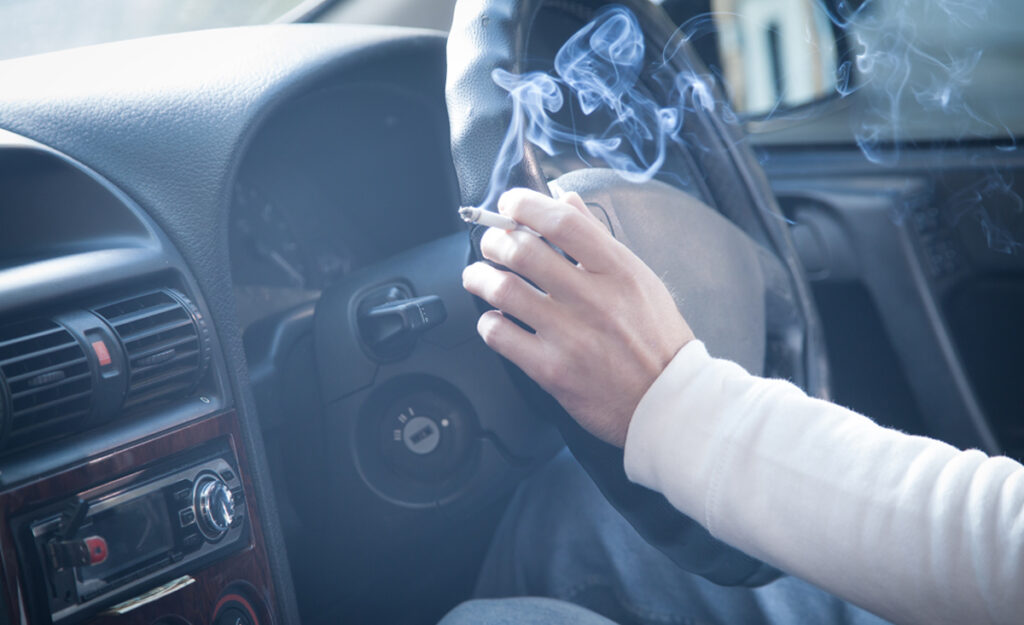
The South African government is working on new laws that would further restrict the use of alcohol and tobacco products for motorists.
Starting with smoking, the Portfolio Committee on Health has begun deliberations on new laws restricting the use of cigarettes and e-cigarettes in a variety of settings.
These changes have been in the works for years, as the government first introduced the new Tobacco Products and Electronic Delivery Systems Control Bill to Parliament in 2022.
While this process has been delayed several times, the Portfolio Committee finally voted in favour of the laws’ desirability in June 2026. Two months later, in August, it began clause-by-clause deliberations.
Once this phase is wrapped up, the committee will submit its findings to the National Assembly.
Included in the new smoking laws are provisions that restrict the use of smoking products in vehicles and other enclosed spaces where other individuals may be affected.
This includes private cars, as section 2(1)(c) of the bill states that no person may smoke in “any motor vehicle or a private enclosed space when a non-smoker or a child is present.”
The laws also apply to public transport and commercial vehicles, as section 2(1)(a) stipulates that “no person may smoke in an enclosed public place, enclosed workplace, or in or on a public conveyance.”
Notably, the bill includes definitions for “workplace” and “public conveyance.”
- Workplace – any premises, place or space, in or on which one or more persons are employed or perform their work, for work purposes, whether for compensation or voluntarily, including any pool vehicle or a vehicle used during or incidental to the course of employment or work.
- Public Conveyance – “any aircraft, ship, boat, train, bus, mini-bus, taxi or other vehicle which is used for the transport, for profit or otherwise, of members of the public.”
Under the new laws, individuals who contravene these restrictions can face penalties ranging from a fine to a conviction and a prison sentence of up to six months.
Zero-tolerance alcohol law still going ahead
Cigarettes and e-cigarettes are not the only sin tax items in the government’s crosshairs, as the Department of Transport is moving ahead with its plan to reduce the legal alcohol driving limit to zero.
Earlier this year, Minister of Transport Barbara Creecy announced that her department was seeking legislative amendments to reduce the blood alcohol level for drivers to 0%.
This would eliminate the existing tolerance band afforded to motorists, as South African law currently allows a blood-alcohol concentration (BAC) of 0.05g per 100 millilitres.
Creecy argued that this change was necessary not just to crack down on drunk drivers, but to send a clear message that alcohol is to be avoided entirely if you are driving.
However, this argument has been challenged by citizens, road safety experts, legal analysts, and industry stakeholders, who warn that a law with no leeway will punish law-abiding citizens.
Products that contain trace amounts of alcohol, such as mouthwash, cough medicine, or even some fruits, would now trigger a positive reading from a breathalyzer test at a roadblock.
There are also concerns that such a harsh restriction unfairly targets responsible motorists who limit the amount of alcohol they consume at restaurants and events.
This has far-reaching implications for the hospitality industry, as alcohol sales make up a significant portion of its total revenue.
Driving.co.za managing director Rob Handfield-Jones pointed out that the average person arrested for drunk driving is more than four times over the legal limit, meaning the worst offenders are not the individuals who’ve had one glass of wine with their dinner.
Furthermore, Cor van Deventer, Director at Van Deventer Dowlath & Marx, noted that a significant portion of the drunk individuals involved in car accidents in South Africa are not drivers, but pedestrians, and that the proposed laws do nothing to address the root causes of the country’s issues with substance abuse.






 Loading ...