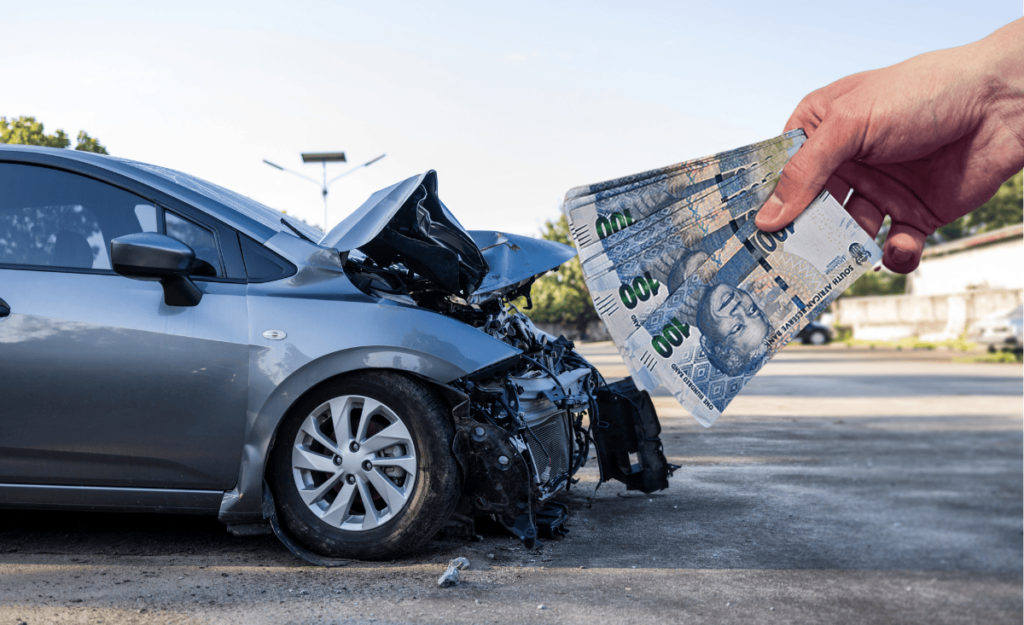
South Africa records roughly 800,000 vehicle accidents each year, costing an estimated R180 billion to R205 billion, which equates to roughly 2.7% to 3.4% of the country’s GDP.
This is according to assessments by the Road Traffic Management Corporation (RTMC) and the Council for Scientific and Industrial Research (CSIR).
As a result, across all accident types, the average financial cost of a road traffic crash in South Africa is approximately R240,000 to R250,000.
When evaluated by the human impact rather than the overall collision incident, the CSIR figures reflect the economic valuation placed on human harm.
Its per-fatality estimates are over R5.5 million in current values, based on the R4 million baseline in 2015. This is predominantly driven by the victim’s loss of future earnings and economic contributions.
Serious injuries can cost over R600,000, driven by medical care, prolonged inpatient bed-days, and vocational downtime, while slight injuries can cost approximately R100,000.
These costs are carried by the Road Accident Fund (RAF), public and private healthcare providers, and private or business insurers.
The RAF pays out tens of billions of rands annually, primarily for loss of earnings, general damages, and long-term medical care, while carrying extensive contingent liabilities.
Provincial trauma units and tertiary state hospitals absorb significant costs treating unrestrained vehicle occupants and injured pedestrians, who account for over 40% of all road fatalities.
Commercial freight operators face higher insurance premiums, fleet replacement expenses, and shipment delays, which cascade down into consumer goods pricing.
It is also estimated that 65-70% of vehicles on South Africa’s roads are uninsured, meaning the owner or driver is responsible for covering the cost of replacing or repairing the vehicle out of pocket.
“It is a problem for the insured who may be in an accident or the victim of an accident when an uninsured vehicle is involved,” explained South African Insurance Association (SAIA) CEO Viviene Pearson.
“In addition, if there’s also infrastructure damage, there’s the cost to the fiscus, to municipalities, provincial governments, those public entities that have to look after the transport infrastructure and so on.”
Car crashes can cost South African companies millions

Driver training and road safety organisation MasterDrive explained that South African businesses should have reached a critical turning point in perceptions of road safety.
It added that organisations can no longer afford to view accidents as merely unfortunate incidents that are covered by insurance anyway, since the true economic impact extends to every corner of a business.
Within businesses, fleet crashes have a staggering immediate cost, ranging from R48,000 for minor crashes to R5.4 million for more serious incidents, according to RTMC and CSIR data.
Fleet vehicle crashes have immediate costs, which are easily calculated, as well as indirect costs that are harder to quantify.
“Immediate costs are the obvious costs including vehicle repairs, insurance excess, and medical expenses,” explained Eugene Herbert, CEO of MasterDrive.
“Yet, these are only the tip of the iceberg. Indirect costs have the potential to dwarf the more apparent ones.”
He added that indirect costs have a cascading effect, since a damaged vehicle means missed client appointments or deliveries, potentially lost contracts, and a damaged reputation.
“Add the administrative burden of the aftermath, legalities, and the time spent on insurance claims,” he noted.
“If employees are injured, costs for recruitment, additional training, and productivity loss can continue for months.”
According to Herbert, the rule of thumb is that for every rand spent on direct accident costs, businesses incur an additional R3 to R5 in indirect expenses.
That means that ten accidents annually in a medium-sized logistics company can translate to millions in hidden losses, while in certain industries, this ratio can be as high as 1:20.




 Loading ...