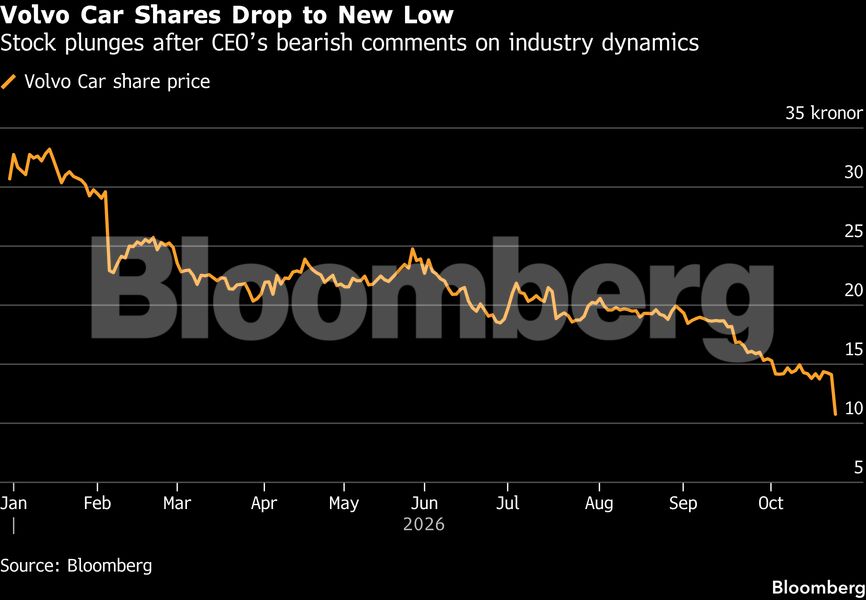
Volvo plunged by more than 30% to a record low after the Swedish automaker’s chief executive officer said the market for Western-developed cars in China is disappearing fast, prompting it to cut 2,500 more jobs.
Deliveries in China dropped more than 40% in the third quarter as local brands dominate the electric-vehicle market and a spending crisis weighs on demand.
Volvo, owned by China’s Geely, is now valued at 29.8 billion kronor (approximately R44.47 billion), 80% less than when it listed five years ago.
“Nobody will be successful with the old recipe where you had global cars developed in Europe and sold them at a premium price in China”, Chief Executive Officer Håkan Samuelsson said Friday during an analyst call. “Those times are gone.”
The job cuts, affecting about 6% of Volvo Car’s workforce, are part of a plan to reduce costs by an additional 5 billion kronor (R8.4 billion).
The latest round, targeting mostly Sweden, comes on top of about 3,000 positions Volvo Car announced it would eliminate last year.
While Geely bought the brand from Ford in 2010, Volvo has stayed close to its Swedish roots with a major footprint of production and engineering teams in Europe.
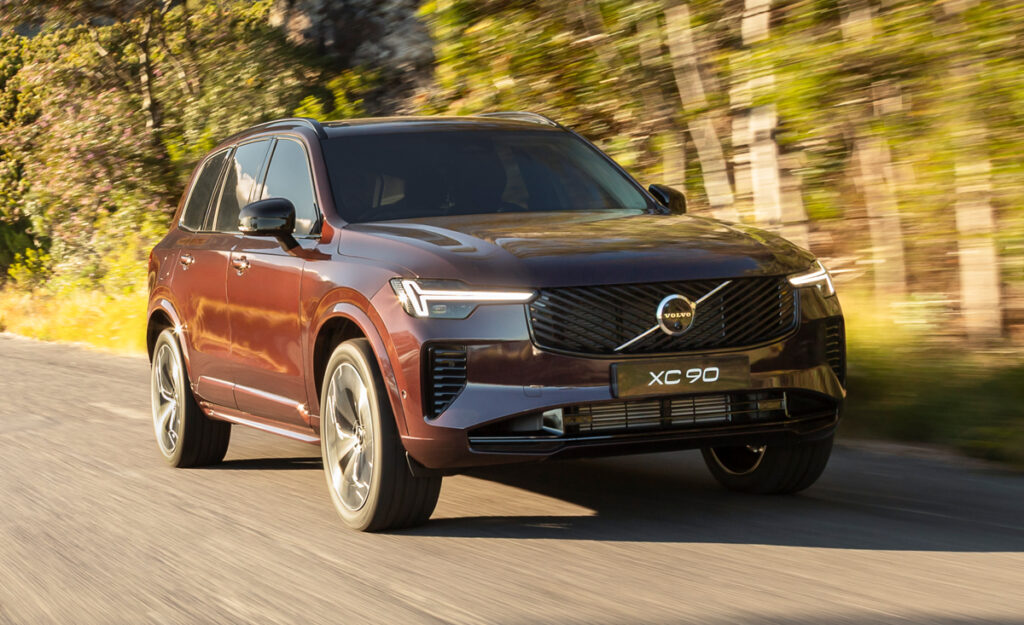
The 99-year-old manufacturer, famous for inventing the three-point seatbelt, still makes its flagship XC90 SUV in Sweden, and ships it to China. The electric iteration of the popular model is made in the US.
Samuelsson admitted underestimating the rapid transformation of China’s car market, where even having a Chinese owner is no longer enough for a European carmaker to succeed.
Vehicles now need to be designed specifically for the domestic market to stand a chance.
Volvo will in future rely on technology and vehicle underpinnings from its Chinese parent to compete, Samuelsson said.
The company is listed but remains nearly 80% controlled by Geely, exacerbating share price swings.
“In China, you need to come back with regionally developed products with Chinese software, and there we of course have a huge advantage that we can work and develop those cars together with Geely,” he said during a Bloomberg Television interview.
Volvo’s deeper savings measures mirror moves by manufacturers including Volkswagen and BMW, who are trying to become leaner to meet mounting Chinese competition.
They’re also stepping up local partnerships in China and development teams to come up with features to better target local tastes. Samuelsson’s comments suggest those steps may not go far enough.
BMW is set to start sales of its new iX3 SUV in China next month, while the world’s biggest luxury-car maker in June slashed its outlook, citing dimming prospects in its biggest market. VW followed last month.
More than a hundred local brands are vying for buyers in China, with the cut-throat competition forcing much faster model development times and lower prices.
Western manufacturers like VW have been slow to react and are lagging on some features favoured by domestic drivers, which have included gadgets like movie screens and advanced voice recognition.
Chinese brands are winning buyers with cheaper electric vehicles, advanced digital features and models tailored to local tastes.
Western automakers, by contrast, have often relied on global models with higher prices and slower development cycles, leaving them struggling to keep pace.
Volvo’s troubles were evident when the company on Friday reported swinging to a loss that was much deeper than analysts had forecast.
Aside from the issues in China, Volvo cited costs from tariffs in the US and the removal of EV subsidies there.
To get back on track, the company plans to introduce seven new vehicles for Western markets and six regionally tailored models for China by the end of the decade.
In Europe, Volvo managed to grow sales even as competition there from Chinese brands is also intensifying.
A European Union push to limit hybrid imports from the Asian country may provide only temporary respite as brands including BYD set up manufacturing in the region.
Samuelsson, who returned in April 2025 after leading Volvo for a decade through 2022, is preparing to hand over the CEO post to former Skoda boss Klaus Zellmer.
The German manager is due to take over no later than 1 October 2027.





 Loading ...