Indian-built cars are rapidly taking over the market in South Africa, putting local manufacturers at risk.
This is according to data from Lightstone, which highlighted how the balance of imported and domestically-produced vehicles has shifted over the last 15 years.
In 2009, roughly half of the 373,303 light vehicles (under 3.5 tonnes) sold in South Africa were locally made, while the other half were imported from various countries.
Fast forward to 2024, and only 37% of the 484,806 light vehicles sold in the country were local products, while 63% were of foreign origin.
The shift is primarily the result of affordability concerns, as local carmakers have gradually shifted upmarket, leaving a gap in the market for new brands to establish a major presence.
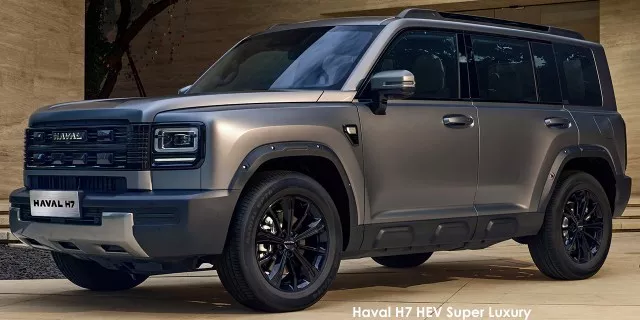
Chinese companies are a good example of this shift, as Chery and Haval have rapidly climbed through the ranks to become top-selling brands in the span of just a few years.
However, China is not the biggest winner of this new dynamic, as Indian-built cars have experienced exponential growth in interest over the last 15 years.
Lightstone auto data analyst Andrew Hibbert explained that in 2009, Indian-built vehicles accounted for 5% of all Light Vehicles sold in South Africa.
By comparison, Japanese-sourced cars clocked in at 12%, while South Korean and German brands both had a 10% share.
“By 2024, the picture had changed, with sales of Indian manufactured vehicles climbing to 36%, well ahead of China (11%),” said Hibbert.
“The growth in vehicle sales originating in India can be attributed to the large number of vehicle manufacturers now producing vehicles in the country, leveraging the relatively cheap cost of labour and overall manufacturing costs.”
It’s important to clarify that ‘Indian-built cars’ does not exclusively refer to Indian car brands like Mahindra, as several companies now have factories on the sub-continent.
Most notably, 84% of the ‘Japanese cars’ sold in South Africa in 2024 were made in India, while only 10% came from Japan.
This is because companies like Suzuki and Toyota source their most affordable models from India, including the Swift and Starlet hatchbacks.
Other non-Indian nationalities importing vehicles built in India include German (9% of imported sales in 2024), South Korean (81% of imported sales) and French brands (74% of imported sales).
Price pain

Lightstone highlighted that the weighted average price (WAP) of South African-made cars has increases relative to the models imported from global production centres.
In 2009, the WAP of a South African-built Light Vehicle was R223,000, making it substantially cheaper than the WAP of an imported model, which was set at around R277,000.
Over the last 15 years, the results have flipped, as the WAP for a local car is now set at R573,000, while imported units are going for around R499,000.
In contrast, Indian-made cars have managed to maintain their position as an affordable alternative.
In 2009, Indian cars had a WAP of R123,000, which has since increased to R303,000.

All of this is to say that local manufacturers are struggling to remain competitive, and some have even resorted to importing Indian models to maintain their market share.
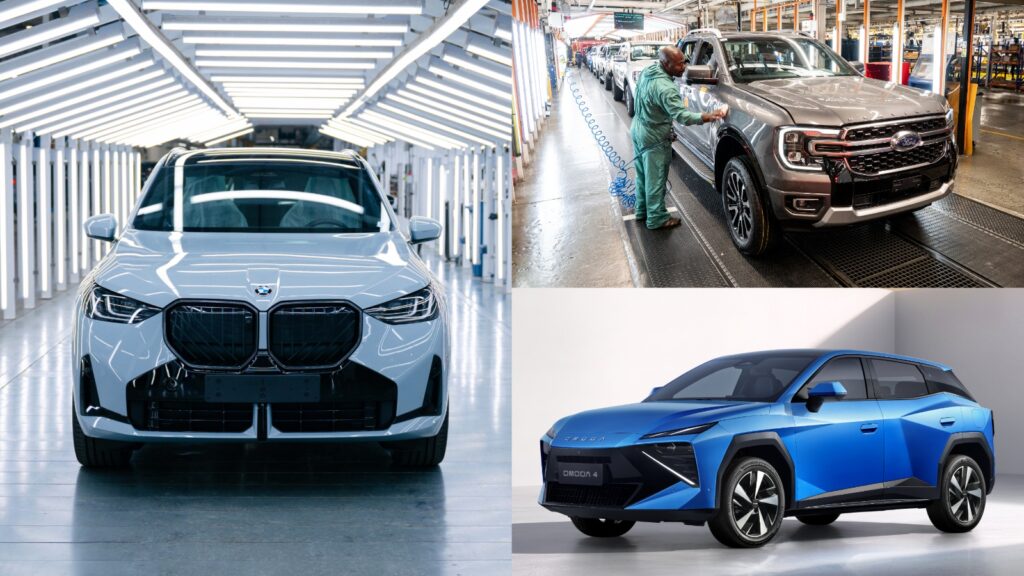
Toyota, for example, has a factory in Durban that produces the R414,800 Corolla Cross and the R528,800 Hilux Double Cab.
Most car purchases in South Africa are less than R400,000, and so Toyota now relies on rebadged, Indian-built Suzuki models to fill the gap in its catalogue.
The effects of this shift can be felt across the industry, as dealerships are starting to feel the pressure from the change in consumer buying habits.
Combined Motor Holdings’ (CMH) 2025 Integrated Annual Report highlighted that the trading environment has become very difficult in the last few years.
CMH, which represents several brands including Ford, Jeep, Land Rover, Mahindra, Honda, Mazda, and Nissan, experienced a 3.2% revenue increase in the last financial year.
However, its trading margins were down at both gross and operating profit levels. Its operating profit fell from R781.16 million in 2024 to R639.54 million, an 18.13% decline, according to Daily Investor.
CMH CEO Jebb McIntosh claimed that this was due to price pressure, which has been exacerbated by the influx of cheap imports and the decline of locally-sourced models.
He went on to say that the unrestricted proliferation of Chinese and Indian vehicle imports poses a significant challenge, claiming it places extreme pressure on local producers.





 Loading ...