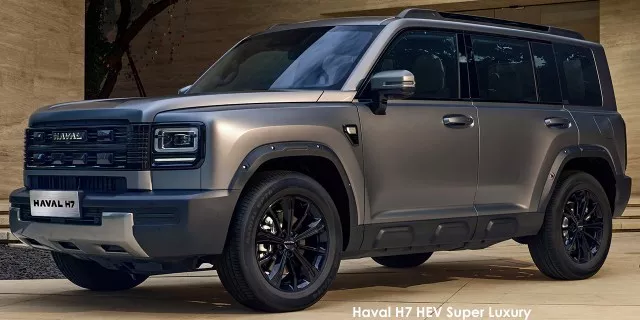
Step aside VW – the 3rd best-selling car brand in South Africa is Chinese


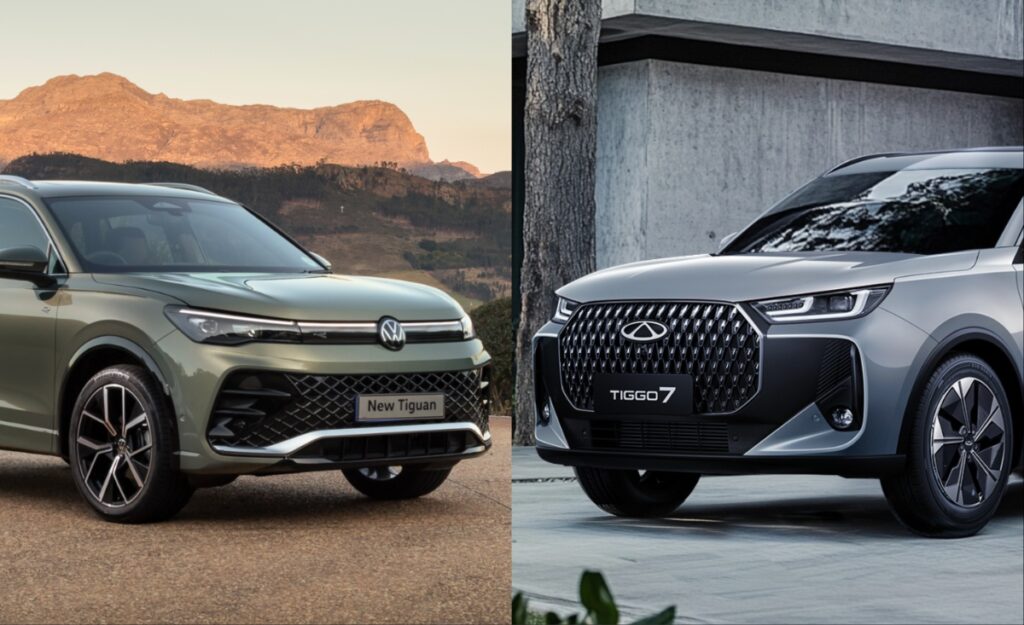
Chery was the third best-selling carmaker in South Africa in January 2026, claiming the title from Volkswagen.
The latest data from Naamsa shows that VW sold 4,774 vehicles in South Africa last month, officially earning it the third spot.
Chery, on the other hand, sold 2,258 units and came seventh overall.
While this is 2,516 units less than VW, this excludes the sales of Chery’s other brands – Omoda, Jaecoo, and Jetour.
These brands operate independently in South Africa and report their own sales figures to Naamsa, but they are ultimately part of the same company.
It is also common practice for other manufacturers to include their sub-brands in their reported sales, as Audi counts towards VW’s total, while Haval and Lexus are included in GWM and Toyota’s sales, respectively.
This means that Chery’s total is actually much higher once we add Omoda, Jaecoo, and Jetour’s sales.
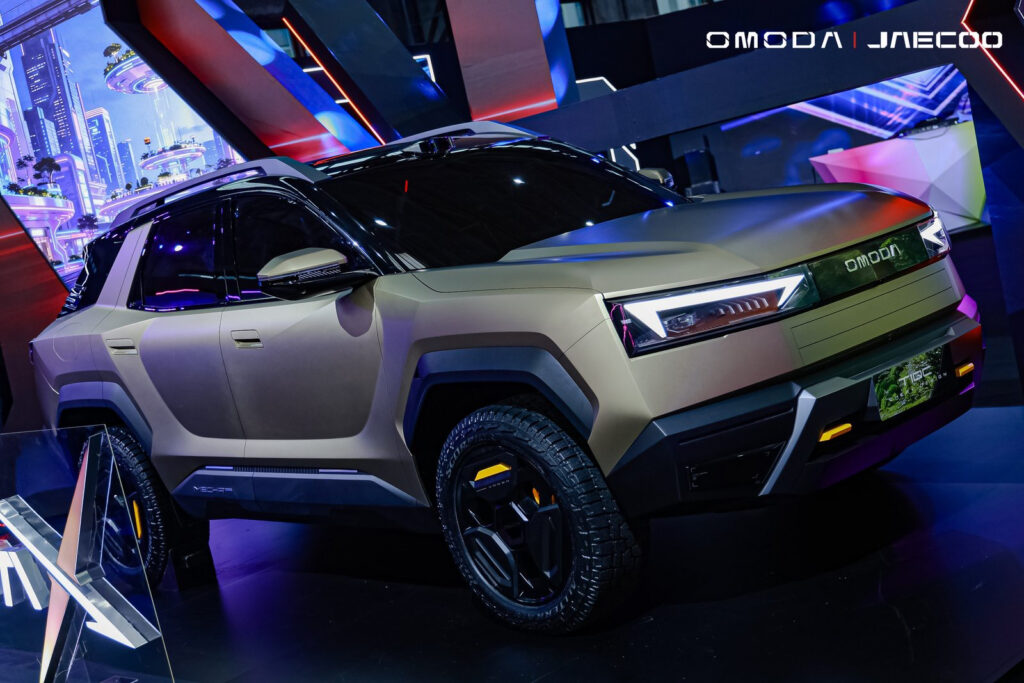
Omoda and Jaecoo (O&J) sold 1,413 cars in January, while Jetour sold 1,550.
Adding this to Chery’s 2,516 units means that the Chinese car brand collectively sold 5,221 cars in South Africa last month – roughly 450 more than Volkswagen Group Africa.
This is even better than it did one month prior, as TopAuto previously reported that Chery was the unofficial fourth best-selling car brand in South Africa in December 2025.
These were the final results for the top 10 best-selling carmakers in South Africa in January 2026, combining all of Chery’s sales into a single figure:
- Toyota – 11,786
- Suzuki – 6,410
- Chery Group (including Omoda, Jaecoo, Jetour) – 5,221
- VW – 4,774
- Hyundai – 3,048
- Ford – 2,678
- GWM – 2,521
- Kia – 1,888
- Mahindra – 1,671
- Isuzu – 1,606
Chery has come a long way in a relatively short time, as it relaunched in South Africa in 2021 and is already outperforming several legacy car brands even before you factor in its sub-brands.
Its first sub-brand, Omoda, made its local debut in 2023, and Jaecoo followed one year later in 2024, forming the twin brand O&J.
Jetour, which is also part of the Chery Holding Group, launched in South Africa independently of its parent company in late 2024, and recently became one of the top 10 best-selling brands in the country, thanks to the introduction of its new T1 and T2 off-road SUVs.
Chery also plans to launch two more sub-brands in South Africa this year, known as Lepas and iCaur.
Lepas will launch in Q1 2026 and will initially offer two SUVs called the L4 and L8. A third model – the mid-range L6 – is expected to follow soon after.
iCaur, meanwhile, recently confirmed that it will arrive in May with its first two cars, the all-electric V23 and 03T SUVs.
It also stated that a range-extended electric vehicle (REEV) version of the 03T will launch before the end of the year.
Affordability is king

Chery’s success in South Africa can be attributed to the value for money of its Tiggo SUV series, which are relatively affordable while offering powerful engines and extensive equipment lists.
This is a recurring theme for Chinese cars, which are often able to match premium German brands at a much lower price.
Affordability – not brand recognition – has proven to be the dominant factor in South Africa over the last five years, as Chinese and Indian brands are starting to dominate the local car scene.
The second most popular automaker right now is Suzuki, which offers more affordable cars than any other company.
While Suzuki is a Japanese brand, all of the models imported to South Africa are made by Suzuki Maruti – the carmaker’s Indian division.
What’s more, many of these cars are also sold by Toyota, albeit with a different badge on the front.
The Toyota Starlet, for example, is actually a rebadged Suzuki Baleno, and the same is true for most of Toyota’s sub-R400,000 catalogue.
In fact, a Cars.co.za breakdown previously revealed that, if you were to remove these rebadge sales from Toyota and give them to Suzuki, the latter would actually be the best-selling brand in South Africa.
A large share of Toyota’s sales also comes from commercial fleet vehicles, whereas most of the other entries in South Africa’s top 10 are carried almost entirely by individual customers.



 Loading ...