


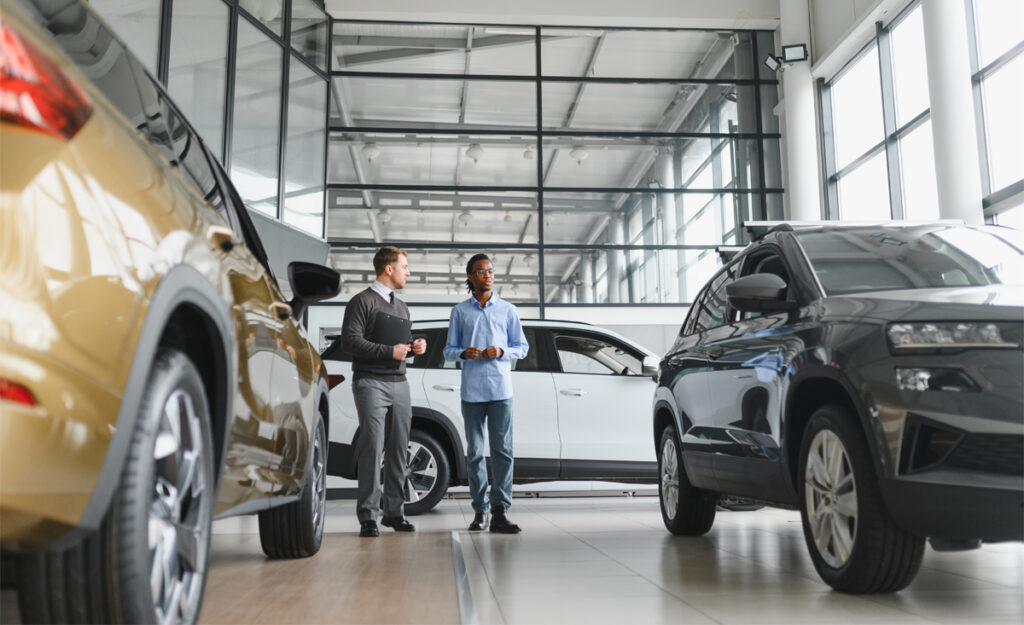
Local car buyers are increasingly likely to shop in the used-vehicle industry as a result of the tariffs imposed on South Africa by the United States (US) government.
This is according to used-car dealership, Weelee, which notes that US trade tariffs are reshaping South Africa’s new car market and driving buyers towards the pre-owned car market.
Sweeping automotive tariffs, including a 25% levy on South African vehicle exports and a broader 30% tariff on goods, have sent shockwaves through the local automotive manufacturing sector.
As a result, Mercedes-Benz temporarily suspended its East London assembly line, while BMW’s Rosslyn plant faced sharply reduced export competitiveness.
Further piling the pressure on local retailers is new-vehicle pricing, as consumers continue to feel the squeeze and turn away from buying new.
Despite the US Supreme Court striking down portions of the tariff framework in February 2026, which dropped South Africa’s general rate from 30% to 10%, the vehicle-specific 25% tariff under Section 232 remains in force.
With this reduction only in place until July 2026, many local car manufacturers are facing long-term uncertainty.
The result of all this uncertainty, according to Weelee, is that South Africans are buying smarter, leading to a marked boom in the pre-owned market.
The dealer reports that the local used car market is forecast to grow from R215 billion in 2025 to R230 billion in 2026.
The new vehicle sales market hit a 15-year high of 596,818 units sold in 2025, flooding the pre-owned market with near-new trade-ins at competitive prices, which also drives more buyers to the used market.
Alongside these, easing interest rates have made pre-owned vehicle finance more accessible than it has been in recent years.
More South Africans are buying used cars

Weelee explains that industry data paints a picture of the market transition, with South African consumers not shying away from buying cars, but rather doing so more carefully.
AutoTrader’s 2025 Annual Car Industry Report, using data from over 46 million users, outlined that the majority of buyers practised restraint, prioritising affordability and practicality over status or novelty.
It added that the 383,410 pre-owned vehicles sold in 2025 generated a total of R160.1 billion in sales, a 7% year-on-year increase.
SUVs dominated the pre-owned segment, accounting for over 37% of sales in 2025, with petrol vehicles making up nearly 64% of pre-owned cars sold last year.
AutoTrader’s data showed that hybrid vehicles are quietly gaining ground and are forecast to grow at the fastest rate through to 2031 as infrastructure catches up with consumer interest.
Commenting on the shift in buyer behaviour, Weelee South Africa CEO Errol Levin said that global trade uncertainty has a way of clarifying priorities for local consumers.
“When new car pricing comes under pressure, the pre-owned market does not become a compromise; it becomes the intelligent choice,” he said.
“Buyers who might previously have stretched for a new vehicle are discovering that a quality pre-owned car offers exceptional value, modern features, and none of the new-car premium.
Errol concluded, noting that off the back of a record new car sales year in 2025, the stock entering the used market right now is some of the best seen in years.



 Loading ...
-2026.10.webp)

-2026.10.webp)