
Who is responsible in a self-driving car accident – And where it leaves human drivers


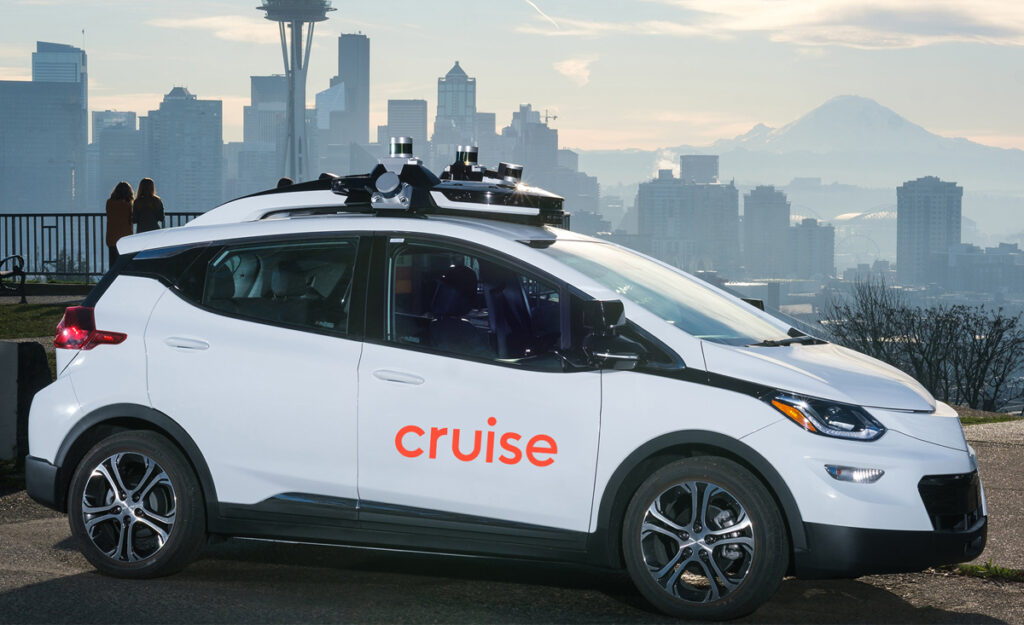
One of the many new technologies that automakers have been pushing for these past few years is self-driving cars – a concept that could fundamentally change the way we think about transport.
While the technology is still a long way from being a common aspect of our everyday lives, it is already raising questions as to how this will affect our legal understanding of who is responsible in a car accident, and whether or not we will still be able to drive at all if self-driving car eventually do become the norm on the roads.
Thinking about the future
Self-driving cars are currently limited to a handful of cities around the world that have given permission to companies to use their streets as real-world test grounds, such as San Francisco.
“Robo-taxi services” like Cruise and Waymo are relatively common sites on the roads there, but they have been the cause of multiple issues since their introduction which led to their operations being suspended in October 2023.
Many of these problems, such as blocking a road when the car’s navigation system fails, are things that can be attributed to the vehicles still being in a trial phase, and that will feasibly be patched down the line to make them safer.
However, this raises several questions as to who, or what, is liable in a car accident that involves a self-driving car, especially as artificial intelligence continues to get better.
Tesla has already been subject to many lawsuits over its “Full Self Driving” feature, but a lot of these cases take issue with the name itself, which implies autonomous driving when it is more comparable to an advanced version of existing safety features such as adaptive cruise control and lane-keep assist.
The real question is: in a hypothetical case where future autonomous cars are considered to be much safer than human drivers, will a human driver always be assumed to be the one at fault in an accident between the two?
There have been multiple answers to this question from various law firms, universities, and carmakers – most of which stem from the United States where many robo-taxi services now operate.

In their current form, car companies insist that the driver is still responsible in an accident as Advanced Driver Assistance Systems (ADAS) still require constant human oversight. This is the argument that Tesla used to win its first case involving a fatal accident with one of its cars.
However, since the cars operate on software developed by their respective manufacturers, there is an argument to be made that the company is liable for an accident where this software was faulty or where it made an error in judgement.
“The nature of modern semi-autonomous systems requires the human and machine to engage in a collaborative driving endeavor,” wrote Cassandra Robertson, a Professor at Case Western Reserve University School of Law.
“The human driver should not bear full liability for the harm arising from this shared responsibility.”
The difficulty here would be proving that the car was at fault, either through a technical failure or due to flawed programming, something that would likely result in a costly uphill battle for the average consumer against a massive corporation.
And so, if motorists face a high risk of driving cars themselves in the future where autonomous vehicles account for a major portion of road traffic, and where the law favours the calculated decisions of a machine over a person’s impulses, will people want to keep driving?
It also raises the question of whether people may be allowed to drive at all in the future if statistics can show that a driverless car is safer in all road conditions, and insurance companies decide that human drivers are a risk factor that they will no longer cover.


 Loading ...