


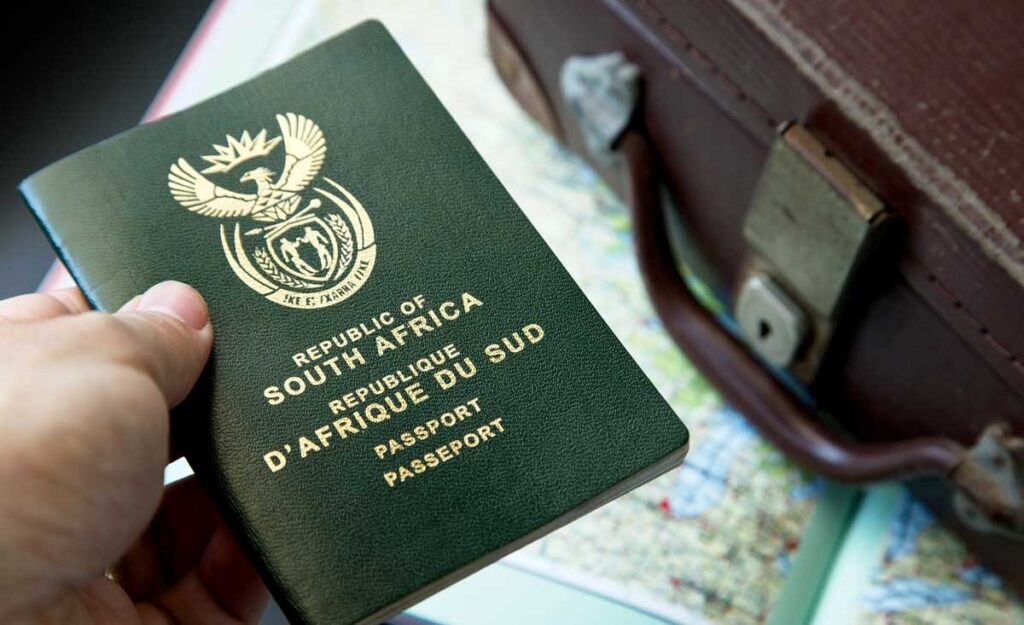
International travellers may soon no longer need physical passports and boarding passports at airports around the world.
According to the International Air Transport Association (IATA), physical travel documents could become a thing of the past as airports shift towards new digital identification systems.
The IATA recently published the results of multiple digital identity Proof of Concepts (PoCs), which were conducted with governments, airports, airlines, and technology providers across Europe and the Asia-Pacific region.
The trials indicated that contactless biometric-enabled international travel is already technically possible and not a distant concept.
Flyers can use a secure digital version of their passport stored on their smartphones, while facial recognition and other biometric checks are done automatically as they pass through the airport.
This will effectively streamline the flying process as passengers will no longer need to carry and present physical documents at multiple points in the terminal.
The IATA claimed the test proved that digital identity systems can already support seamless travel, even when multiple airlines and different digital identity wallets are involved.
Examples of this include the Digital ID in Apple Wallets for US passport holders, Google ID Pass for UK and US passport holders, and national systems such as India’s Digi Yatra.
The PoCs were designed around IATA’s One ID standards, its Contactless Travel Directory, and international standards developed by ISO, OpenID and W3C.
“We have proven that digital identity for international travel works securely and efficiently,” said Willie Walsh, IATA’s Director General.
“For travellers to benefit from this important modernisation, governments must accelerate efforts to issue and accept Digital Travel Credentials (DTCs)—secure digital versions of passports.”
Passengers could also securely share only the information required to travel in advance, with their consent.
This would allow checks to be completed before the individual even arrives at the airport, helping to cut queues and reduce the need for multiple passport, ID, and boarding pass inspections.
Digital passports and boarding passes already a possibility

The IATA also claimed that biometric verification could allow for seamless “tap-and-go” experiences, replacing the need for manual checks at airports.
Walsh said the benefits would be tremendous, greatly improving security while boosting airport efficiency.
“By sharing identity data in advance, checks can be completed earlier, reducing the need for document checks at airports and cutting queues,” he said.
“Industry collaboration has shown digital identity works in practice. The next step is for governments to put the frameworks in place to integrate digital identity into global travel processes.”
The IATA’s recommendations follow proposals made by the International Civil Aviation Organization (ICAO) in 2025.
In South Africa, the director of industry and innovation at SITA, Andy Smith, has stated that the the digital future of airports is within reach.
In a previous interview with 702, Smith said that the new system would allow passengers to complete most checks before they arrive at the terminal.
“Where we’re getting to now is the ability for travellers to get a very positive idea that they are going to be able to travel through an airport, across borders, seamlessly and without having to present either their passport or their boarding pass,” he said.
“Before you set out for the airport, you know that you have completed all the airline processes.”
“You know that you’re going to have a seamless experience through the airport, and more importantly, when you get to your destination, you’re going to have a very simplified arrival experience.”
The IATA stated that governments can prepare for the digital shift by implementing the technical, legal, and operational frameworks needed to support the rollout.
Countries will also need to accept these new digital travel documents across borders.






 Loading ...