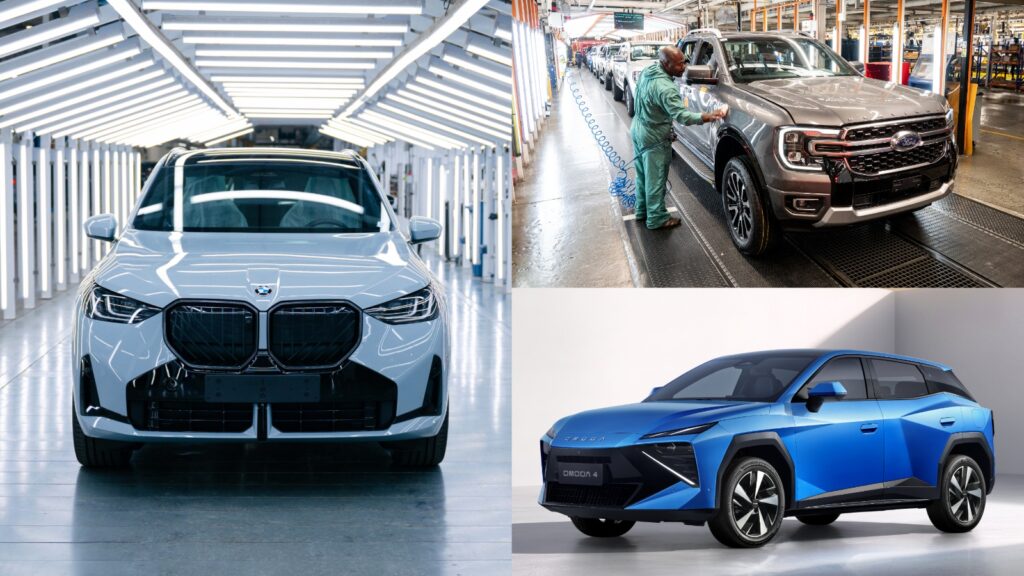
Car manufacturers that have been established names in South Africa for years are being displaced by cheaper alternatives from markets like China and India.
This is according to the Bureau of Economic Research (BER), whose report detailed how increasing imports are shifting the local automotive market.
When it comes to vehicle production, South Africa ranks 21st globally, producing merely 0.64% of all vehicles worldwide.
By comparison, fourth-place India accounts for 6.4% of all vehicles sold globally, while China, the world’s largest producer of new vehicles, accounts for 33.7% of global vehicle production.
As a result, it is easy to see why just shy of 70% of all new vehicle sales in South Africa in 2025 were imports, 56.2% of which originated in India.
At the same time, Chinese badges increased their share of South Africa’s import market, rising from less than 10% in 2021 to 23.3% of all sales in 2025.
This increase in cheap imports from India and China has shifted local market share dynamics, placing increasing pressure on established and legacy carmakers, including Nissan and VW.
VW has lost its place as South Africa’s second-biggest automotive brand to Suzuki, which imports most of its locally sold models from India.
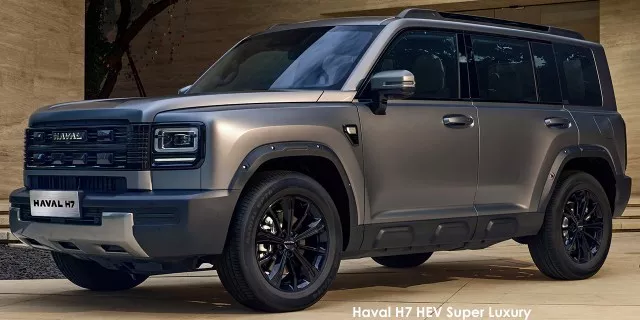
Nissan, which has agreed to sell its local manufacturing operations to Chinese auto giant Chery, has fallen out of the country’s top ten badges, losing the sixth-place it once held to GWM.
The Bureau of Economic Research report detailed that only four of the ten top-selling car brands in South Africa last year were locally manufactured.
Unsurprisingly, the best-performing local manufacturer was Toyota, as the Hilux-builder held onto the top spot it has occupied for more than 20 years.
The trouble with local production

The findings in the BER’s report highlight significant structural weaknesses that have for years been present in South Africa’s automotive manufacturing sector.
In 2018, the Department of Trade, Industry and Competition (DTIC) put forward South Africa’s Automotive Master Plan, with a vision of producing 1% of all vehicles sold globally by 2035.
Last year, South Africa produced approximately 610,405 vehicles, which is around 56% below its long-term manufacturing target of building 1.4 million vehicles annually.
Local vehicle production has stagnated over the last decade, as logistics disruptions and energy insecurity have driven up operating costs for manufacturers.
South Africa’s poor economic growth and high cost of living have also driven car buyers towards more affordable imports from China and India.
At the same time, the country’s vehicle production policy is geared more towards meeting globally competitive export standards.
The BER noted that this strategy has been largely successful in establishing the sector as one of South Africa’s leading export industries.
“However, it has also shaped an industry more closely aligned with global demand and export performance than with the affordability and competitiveness requirements of the domestic vehicle market,” it said.
Still, South Africa recorded a total automotive trade deficit of R66.5 billion in 2025, which highlights that the country imported far more vehicles than it exported.
South Africa’s trade deficit with Asia has grown by 162% over the last decade and reached R143.5 billion in 2025, as more than 80% of all cars exported end up in the United Kingdom and Europe.
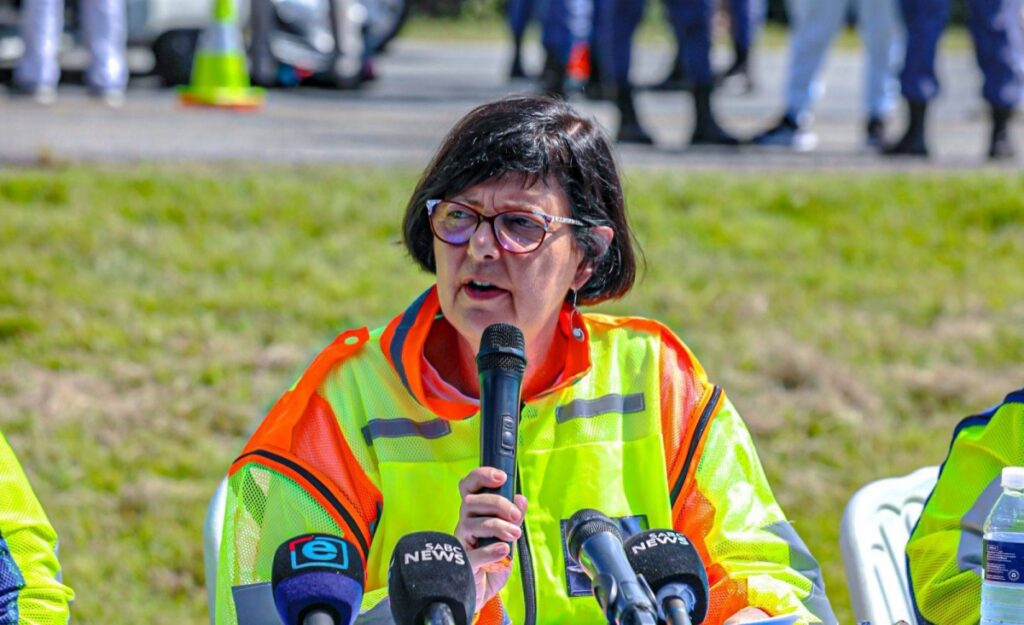
BER junior economist Rose Murunzi told 702 that understanding the sector’s constraints and developing strong policy to address these is vital to protect local manufacturers.
She noted that it is crucial to correct local production and its constraints, adding that it is “easy” to worry about the competition, but harder when the country does not have the correct environment to compete with them.




 Loading ...