There are 85,000 too many taxis in South Africa – Transport Minister


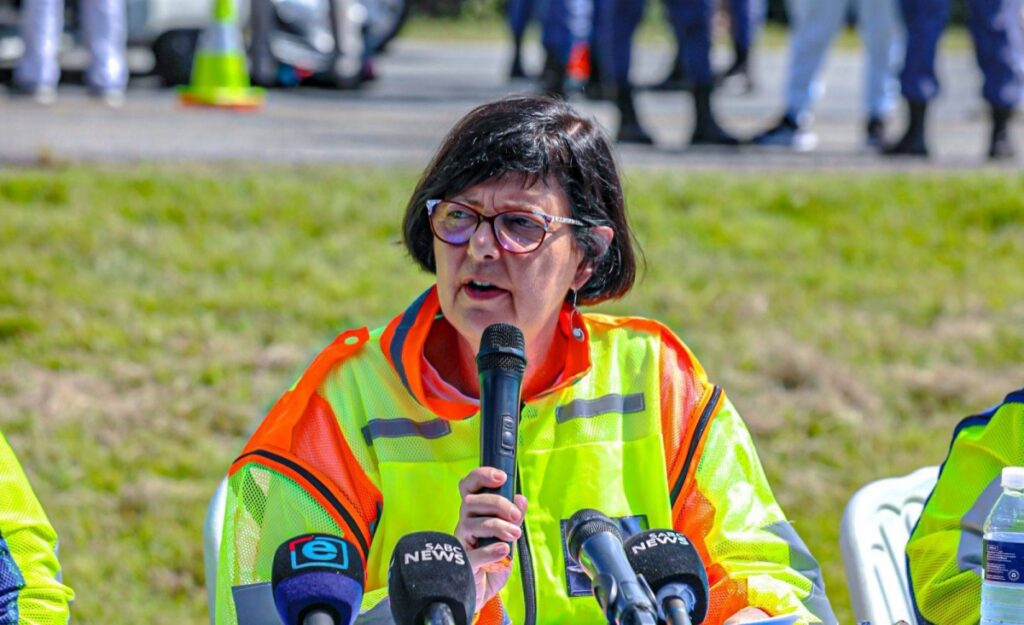
While the taxi industry plays a key role in South Africa’s national transport landscape, Transport Minister Barbara Creecy says that there are 85,000 too many minibus taxis on our roads.
She mentioned this during her address at the latest South African National Taxi Council (Santaco) National Electric Conference
The minister did credit the industry for its major role in the local economy, highlighting that its revenue is estimated between R60 billion and R100 billion per year, contributing 1.4% of our GDP and up to 300,000 jobs.
Creecy noted that minibus taxis transport eight out of every ten local commuters, enabling access to education and economic activity, adding that, despite this, the market is saturated.
“Now, in our assessment, there is currently an oversupply of approximately 85,000 minibus taxis on the road, creating unproductive competition and oversaturation of routes,” she said.
“This calls for urgent intervention by the industry itself that will ensure balanced route allocation, improved profitability and long-term industry sustainability”
Creecy went on to explain that she has received questions about what will become of the drivers should 85,000 taxis be taken off the road.
“The answer is you have a captive market. Go to any taxi rank, and there are queues and queues of people there,” she said.
Due to market oversaturation and more companies joining the sector regularly, taxi companies and operators are increasingly likely to compete with one another.
Minister Creecy shared an example of a problem facing the local taxi industry, where there used to be 20 customers shared between 10 taxis, which now becomes 20 customers with a choice of 20 taxis.
“It’s up to the industry itself to ensure balanced route allocation and, by ensuring balanced route allocation, to ensure improved profitability and long-run industry sustainability,” she added.
South Africa’s plan for the taxi industry

Hosted in March, the inaugural National Transport Conference highlighted the development of an efficient public transport system as a requirement for its long-term sustainability.
During the conference, it was decided that an integrated modern transport and logistics system in South Africa must have rail as its backbone to move goods and people.
In her address, the minister noted that while this is true, road-based transport, including taxis and buses, will be the “arms and legs” of this backbone, fulfilling crucial roles in the first mile and last mile.
Fragmentation in the governance of public transport also exists, including within funding streams, highlighting the need for a new framework for road-based public transport.
This includes formally integrating the minibus taxi industry into a safer, more efficient, and better-regulated transport network.
The minister explained that a new funding model is underway, which consolidates public transport funding streams with new funding allocation principles and conditions.
“Existing funding instruments, including the public transport operations grant, the public transport network grant, the taxi recapitalisation program, and the learner transport program, will be restructured into a unified public transport funding model,” she explained.
“This reform process will support the long-term sustainability of the sector while derisking the taxi industry to attract greater formal investment through improved regulation, transparency, and safety standards.”
Derisking the local taxi industry is a major target for the Transport Department, with several issues that need to be addressed to achieve this.
“We have to address the fact that many taxi operators function outside of formal business structures, which hinders efforts to professionalise the sector,” said the minister.
“The level of informality leads to a lack of financial transparency, making it difficult to access funding or credit because there is simply no record of income and consequently no reliable source of passenger numbers.”
Another major concern for the department is the number of illegal operators, which makes it difficult to trace vehicles and issue operator licences.
“Combating illegal operations requires coordinated efforts between transport authorities at all levels, law enforcement and the industry,” the minister noted.
“As a department, we are working with the national public transport regulator to oversee and monitor the performance of provincial regulatory entities so that we can improve operator licensing.”





 Loading ...