South Africa needs cheaper cars – The government wants to make them more expensive


The government is considering placing new tariffs on imported cars to disincentives the purchase of these vehicles.
Earlier this month, Parks Tau, Minister of Trade, Industry, and Competition, revealed that the government is considering changing subsidies for locally manufactured vehicles and auto components.
It also plans to review tariffs places on imported models.
The announcement was made in response to South Africa’s rapidly changing automotive landscape, as imports now account for 64% of all car sales.
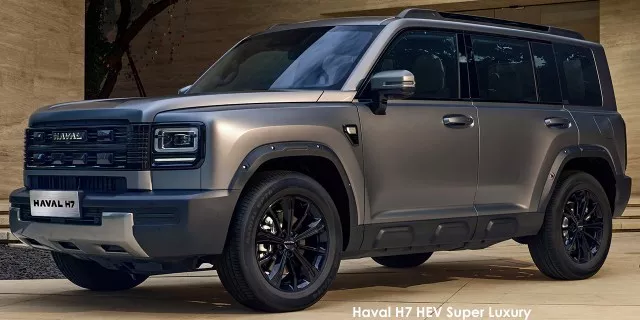
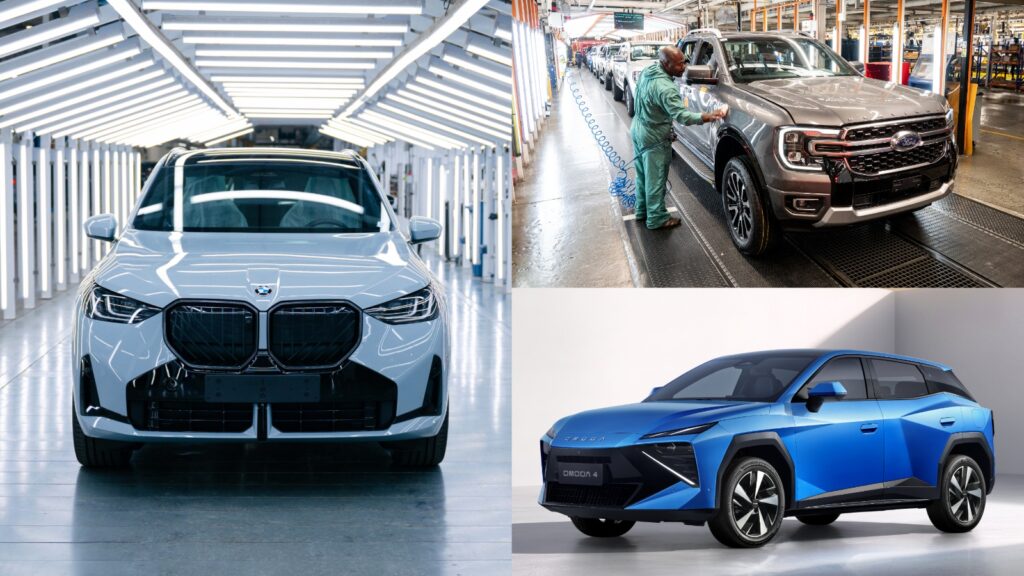
The last two years have seen a flood of new Chinese brands enter the market, including Omoda, Jaecoo, Jetour, BYD, Dayun, Foton, LDV, GAC, and MG.
Another 10 are scheduled to debut in the near future, comprising iCaur, Lepas, Leapmotor, JMC, Denza, Changan, Deepal, Dongfeng, Geely, and Riddara.
Two Chinese automakers – Chery and GWM – are already among the top 10 best-selling brands in the country with figures on par with local producers like Isuzu.
It’s not just Chinese companies that are getting in on the action, as Indian cars are also incredibly popular.
This includes Mahindra, as well as Indian-built cars from other brands like Suzuki, Hyundai, Nissan, and Renault.
The common thread across all of these vehicles is that they are relatively affordable, especially when compared to their locally-produced competition.
The news that the government may impose tariffs on these cars has, therefore, raised questions as to whether this is the best course of action, and whether it will end up punishing consumers who are already struggling to find affordable options.
New car prices are more expensive than ever, forcing many households to downsize from two cars to just one, while others are taking out increasingly long-term finance plans to find a manageable monthly repayment option.
The average vehicle loan issued in South Africa now spans 72 months (six years), and even longer 84-month and 96-month contracts are starting to take off.
It’s a clear sign that cars are becoming prohibitively expensive for the average salary, which means one thing – South Africa needs more affordable cars.
South Africa’s affordable car problem

The problem is that South Africa has very few affordable cars, particularly ones that are locally-made.
Only four models cost less than R200,000, and 73% of all vehicles now retail for more than half a million rand.
South Africa has several car factories, but a key issue is that hardly any of the models produced here are considered affordable or ‘mass market.’
The VW Polo Vivo, built in the Eastern Cape, is arguably the best example, but even this now costs a minimum of R271,900, while the Polo starts at R373,800.
It’s a similar story with bakkies, as the cheapest Toyota Hilux, Isuzu D-Max, and Ford Ranger double cabs now go for R528,800, R561,500, and R620,000, respectively.
It therefore comes as little surprise that motorists are flocking to cheaper models imported from India and China, especially when you consider that these now make up the bulk of cars under R400,000.
While this is undeniably an issue for local manufacturers, it is symptomatic of a car market that is no longer aligned with the needs of consumers.
In light of this, imposing tariffs on imported models to protect the local car industry may seem like a solution that punishes consumers by raising prices on cheaper goods while failing to address the lack of affordable, local alternatives.
VW has announced that it plans to assemble a new entry-level crossover in South Africa, but the issue is that these plans can take years to execute.
The new model, the Tengo, will only go into production in 2027, illustrating that this type of industry shift cannot take place overnight.
A more cynical argument against the use of tariffs is that the government is simply looking for another easy revenue stream at the consumer’s expense.
A silver lining

It’s not all bad news, however, as the Department of Trade, Industry, and Competition explained that punitive tariffs are a last resort, despite widespread calls for their implementation from companies like BMW and other stakeholders in the automotive supply chain.
“With regards to Chinese and Indian auto, it is a discussion that we’re currently having with the intention of taking a less punitive approach, but rather taking a more proactive approach of getting some of those products manufactured in the country,” said Tau.
“So we’re not holding the stick as a starting point. We start with the carrot and then balance it with the stick.”
He claimed that multiple Chinese carmakers had expressed interest in establishing themselves in South Africa, and that the department plans to engage with Suzuki – the second best-selling brand in the country.
Chery has plans to build a research and development centre here, and its leaders have suggested that the company could establish a full-blown production facility “when market conditions permit.”
Mahindra is also ramping up its investment in South Africa, having recently opened a new assembly plant in Durban.
These are positive signs to be sure, but it remains to be seen whether South Africa will use the carrot or the stick to protect its car industry, and whether these measures will result in a meaningful drop in prices for consumers.




 Loading ...