
Chinese auto giants to fund South Africa’s electric car chargers


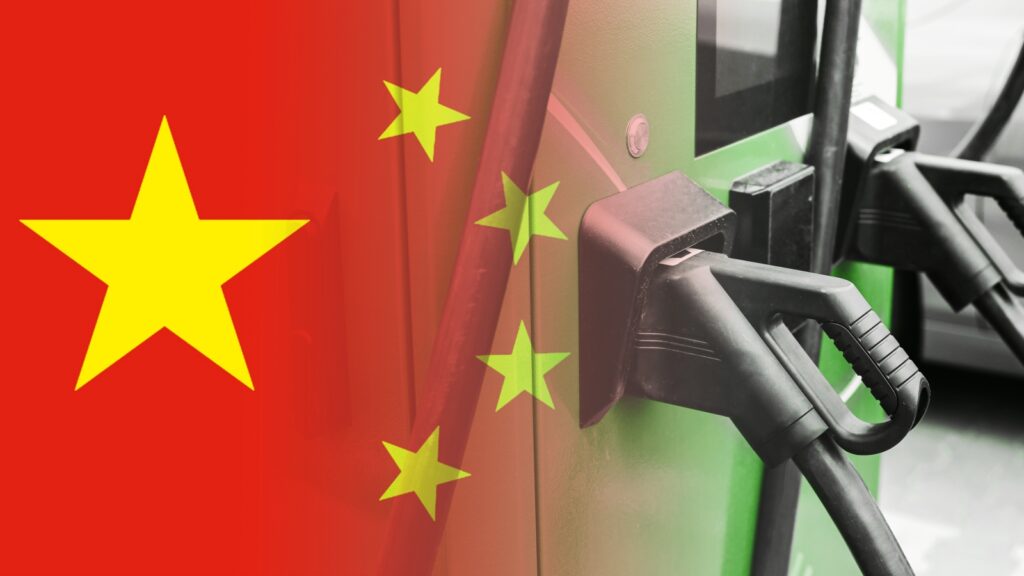
President Cyril Ramaphosa has admitted that Chinese car manufacturers have offered to build South Africa’s national electric car charging network to accelerate local adoption.
The president said this during yesterday’s parliamentary Q&A session, when he was asked about the country’s role in electric vehicle (EV) production.
Build One South Africa (BOSA) leader Mmusi Maimane highlighted that South Africa has already lost its crown to Morocco in terms of car manufacturing, adding that further losses could be detrimental.
He went on to ask Ramaphosa whether he would be willing to introduce reforms to introduce more EVs into the local market and ramp up local electric car manufacturing.
“We cannot keep making petrol motors in an economy that is moving towards electric,” the BOSA leader noted.
In his response, President Ramaphosa declared EVs the future, noting that many companies around the world are already switching to electric cars, despite these having unique challenges.
He added that the government – particularly the Department of Trade, Industry and Competition (DTIC) – is finalising a complete EV policy, which will be issued and adopted once complete.
This new policy will encourage car manufacturers to “come to the fore” and implement their own local EV strategies, whether that be local manufacturing or merely increasing the number of local offerings.
According to President Ramaphosa, several car manufacturers are willing to work with South Africa to accelerate the country’s EV adoption.
“Many car manufacturers that I’ve been to, in China for instance, want to speed up their own production processes of electric vehicles,” he said.
“A number of them have even said they will lay out the charging system throughout the country, so that South Africa can migrate to EVs.”
Ramaphosa concluded, saying that we have the most developed industrial base on the continent, which will make it easier for South Africa to adopt more EVs and produce them locally.
“We will be able to take to this quite easily, and quite quickly,” he declared.
The government stands in its own way

With the president admitting that the DTIC is looking to overhaul the electric car programme, some believe that the country’s existing policies need to be re-examined.
Earlier this year, local off-grid electric car charging station owners and vocal EV supporters, Zero Carbon Charge (Charge), wrote to the president, urging him to act decisively on the local EV transition.
The company warned that the government’s continued inaction is undermining potential investment, leading to poorer energy security and slow economic growth.
Despite three years of direct engagement, Charge claimed the government failed to make any considerable progress towards charging infrastructure or provide practical steps toward an EV future.
It added that this lack of policy and decisive action threatens South Africa’s ability to compete in the global EV market.
Charge co-founder Joubert Roux called on the government to take immediate, practical action, including lowering EV import tariffs, as well as the removal of red tape blocking EV and renewable infrastructure.
The company said that it was able to establish its first off-grid EV charging station without government support, adding that instead of enabling private investment, several government departments have acted as obstacles.
“The South African National Roads Agency (SANRAL) has delayed regulatory feedback for more than 1,000 days and attempted to apply fuel-station tariffs to renewable-energy microgrids under the guise of ‘sweating assets’,” Charge explained.
It said this approach “fundamentally misclassifies clean-energy infrastructure”, indicating a lack of support to potential investors.




 Loading ...
-2026.10.webp)

-2026.10.webp)