
Finance minister responds to call for more petrol price tax relief in South Africa


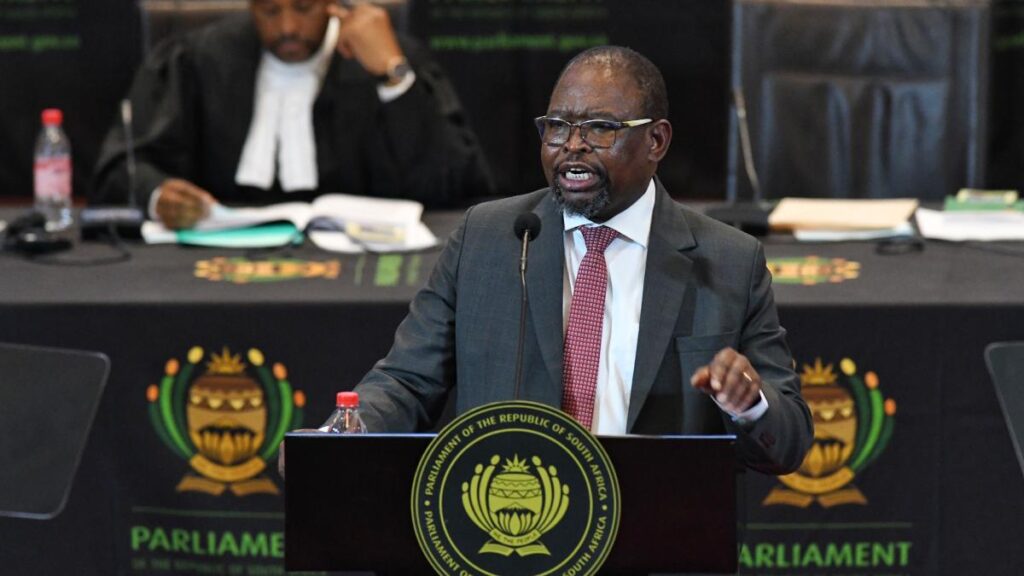
South African Finance Minister Enoch Godongwana said that the government cannot fully protect motorists from the high petrol prices caused by the war in the Middle East.
This was in response to a parliamentary question, where the minister was asked what concrete intervention measures the National Treasury has put in place to safeguard consumers from the global fuel price and inflation shock.
Godongwana replied, stating that the government cannot fully insulate consumers from a sustained increase in international oil prices.
He added that a big reason for this is because South Africa is a net importer of crude oil and petroleum products, making it more susceptible to fluctuations in global oil prices.
This comes after the government previously implemented a temporary cut in the General Fuel Levy (GFL) to reduce the price of petrol and diesel, following the start of the war in Iran.
The war between the United States and Iran began in late February and had an immediate effect on oil prices. Brent Crude skyrocketed from $70 per barrel to $112 in March 2026.
Because of this, the price of petrol and diesel was on track for a massive increase in April, which prompted the government to cut the GFL, the single largest fuel tax, by R3 per litre as an emergency relief measure.
The price cut was only supposed to last for one month; however, the state later extended it to May due to the continued high oil prices.
Oil prices began to recover in late May, when the US and Iran engaged in peace talks, with Brent Crude dropping to around $92 per barrel.
As a result, the National Treasury elected to reintroduce half of the GFL in June, adding R1.50 back to the retail fuel price. The other half of the GFL was re-added in July.
Since then, there have been no further relief measures from the government, even though oil prices have spiked again after the US and Iran resumed fighting.
Brent Crude oil is trading at around $100 per barrel at the time of writing, up from $70 at the start of July.
Petrol prices increased by R1.34 per litre this September, while diesel increased by R3.15 per litre. The current projections from the Central Energy Fund indicate a similar hike is on the cards this October.
If this happens, petrol will reach a new record high of nearly R29 per litre, while the wholesale price of diesel will be pushed to R32 per litre.
Petrol price relief measures have their own cost

When asked if the government was planning a new intervention measure to reduce fuel prices, Godongwana explained that doing so has its own cost.
“Permanently offsetting these increases through the budget would ultimately shift the cost to taxpayers or increase government borrowing,” said the finance minister.
“Fiscal policy therefore involves trade-offs: providing additional relief to consumers must be weighed against the impact on other spending priorities, taxation and government borrowing.”
He commented on the relief measure introduced in April, saying that any further intervention would need to balance immediate relief to households and businesses against the severity and duration of the shock and available fiscal space, while preserving fiscal sustainability.
Godongwana said that tackling the high cost of living was part of the government’s Medium Term Development Plan for the 2024-2029 period.
This includes measures for vulnerable households, improving access to affordable basic services, and reviewing administered prices, including the fuel price formula.
He added that responding to external shocks, such as the surge in global oil prices, required a whole-of-government programme to be effective.



 Loading ...
Conversation
3 commentsBS, always blame the war, but it is you thieving lot with all your taxes and levies for your couches. You have pushed the petrol price up since your racist lot think you are in power 30 years ago.