
Toyota sends cease-and-desist letter to AA over Starlet zero-star safety rating


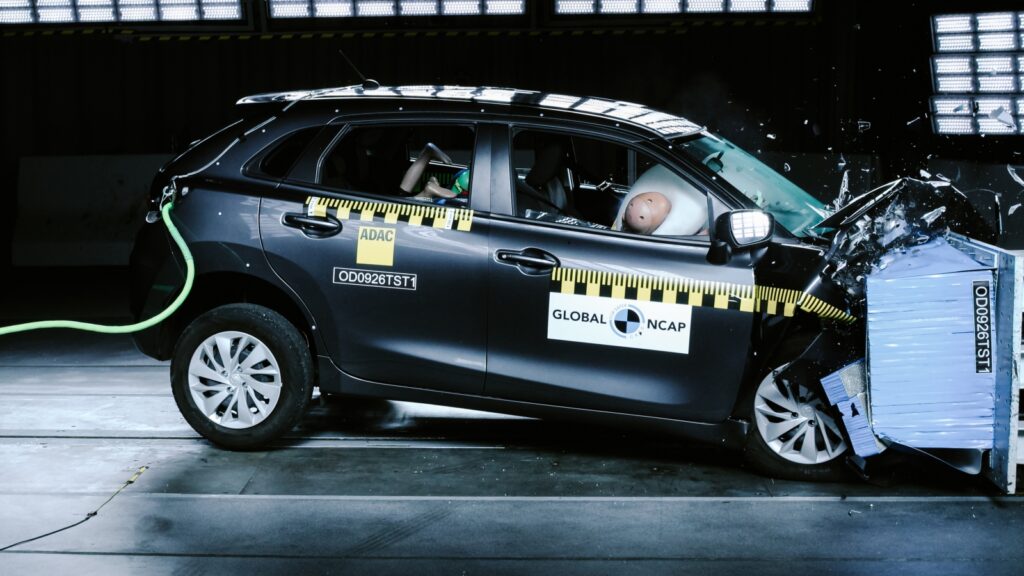
This week, the Automobile Association (AA) announced that the current-generation Toyota Starlet received a zero-star safety rating during crash testing.
The Starlet is one of Toyota’s most affordable cars at a starting price of R271,000. It is also one of the best-selling vehicles in South Africa.
The vehicle was tested as part of the #SaferCarsForAfrica campaign, intended to raise awareness of the discrepancy in safety standards between cars sold in Africa and those sold in other markets.
According to the AA, the Starlet crash tests demonstrated serious safety failings, particularly during side-impact testing, as it lacks restraint systems like side-body and curtain airbags.
“These findings, in conjunction with a structure that could not provide adequate protection, led to the final Zero Star rating,” it said.
The AA clarified that these tests are for the entry-level Starlet models sold in South Africa before September 2025, as the vehicle received an update that month that added six airbags across the range.
However, the association noted that over 20,000 units have been sold in South Africa prior to the safety upgrade.
“Many of these owners may be unaware of the vehicle’s subsequent safety upgrade or that the range faces serious safety concerns.”
Toyota disputes the AA’s claims

Following the announcement, Toyota South Africa Motors (TSAM) has sent a cease-and desist letter to the CEO of the AA, Bobby Ramagwede, disputing the group’s claims.
News24, which has seen the letter, reported that TSAM places the following facts on record:
“The model assessed by the AA is from an obsolete model and is not representative of the Starlet currently available in the South African market.”
“The Toyota Starlet, on sale locally, has been significantly enhanced and complies with all applicable local regulatory requirements as well as Toyota’s global safety standards.”
“At Toyota, safety is a fundamental and non-negotiable priority. Guided by our commitment to creating ever-better mobility for all, we continuously invest in advanced safety engineering, robust structural design, and accessible in-vehicle safety technologies to protect drivers, passengers, and all road users.
AA stands by its report

The AA said it stands by its information, which is based on factual data from Global NCAP (GNCAP) crash tests.
Additionally, GNCAP noted that no structural updates are evident following the September 2025 update that added the four airbags.
It also plans to submit the updated models for crash testing later this year.
GNCAP CEO Richard Woods criticised the Japanese brand for its poor test results, calling the zero-star rating “a shocking result”.
“The Starlet, one of the most popular cars sold in South Africa, had an unstable bodyshell, as well as poor head and chest protection, which are both causes for serious concern,” he said.
Ramagwede expressed similar concerns, noting that thousands of owners who purchased the pre-update Starlet are at risk of serious injury during a crash.
“These entry-level vehicles are also readily available in vehicle rental and corporate fleets, which further multiplies the risk to motorists,” he said.
“Safety equipment and vehicles that are manufactured to a high standard of structural safety should never be an optional extra or a feature that is reserved for markets outside of Africa.”
While Toyota asserts that it is fully compliant with local safety requirements, the AA argues that carmakers should not hide behind South Africa’s lax vehicle safety legislation.
This is not the first time the AA has slammed a locally-sold car for poor safety standards.
The Chery Tiggo 7 and Toyota Corolla Cross both received a two-star safety rating, and the Hyundai Grand i10 received a zero-star rating.
Hyundai responded to the AA’s claims, stating it was committed to driver and occupant safety in South Africa.
It insisted that the i10 met all the safety and homologation requirements stipulated by the National Regulator for Compulsory Specifications (NRCS).
The company added that, while additional independent assessment ratings are useful reference points, they do not replace or override South Africa’s regulatory standards.
Despite this, Hyundai later released a new Executive model for the i10 meant to address safety concerns, adding features like electronic stability control and more airbags.
Chery did the same thing with the Tiggo 7, launching a new variant with seven airbags and new advanced driver assistance systems.


 Loading ...
-facelift-2-2025.10.webp)
