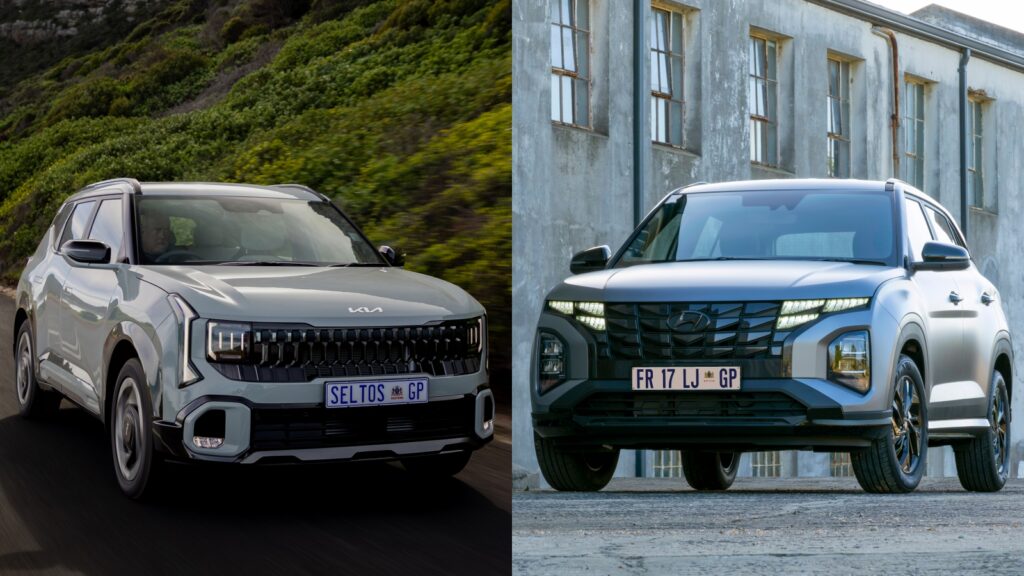
South Korean carmakers, including Hyundai and Kia, and automotive parts manufacturers will continue to benefit from South Africa’s favourable import duties for at least another year.
This follows two critical amendments to the Customs and Excise Act, 1964, issued by Finance Minister Enoch Godongwana, meant to protect imports from the East Asian nation.
The South African government issued a notice in May last year that outlined the second phase of a temporary economic intervention to protect the local steel industry from an influx of cheap imports.
It amended the section that would allow it to reduce the safeguard duties on imported hot-rolled steel products from 13% down to 11%.
This will help shield vehicle and automotive parts manufacturers from higher tariffs, since several key automotive components are made of this type of steel.
Examples include chassis, frames and subframes, as well as suspension and steering components like control arms.
Hot-rolled steel also plays a critical role in steel wheel rim production, as well as brake pedal arms, mounting brackets, axle housings, and engine mounts.
These materials are also used in stamped panels and body structures, especially critical reinforcement structures like pillars and door and bumper reinforcement beams.
The amendment made by Minister Godongwana will see the extension of the 11% tariff, which was scheduled to expire in May next year, up to and including 1 May 2028.
Because South Korea is a major player in the vehicle manufacturing and automotive component export sectors, the extended trade agreements could have long-term effects on local supply chains and vehicle pricing.
This will particularly benefit Hyundai, which operates a local assembly plant to build commercial trucks for local sales and exports to neighbouring countries like Botswana and Namibia.
The amendments also come at a time when many are calling for greater protection of the local automotive manufacturing sector, especially against what are known as “dumping” practices, which have become commonplace in South Africa.
South Africa’s auto sector requires protection

South Africa is home to six legacy original equipment manufacturers (OEMs), including Ford, VW, Mercedes-Benz, BMW, Isuzu, and Toyota.
Other OEM carmakers also have factories in the country, including Chinese brands BAIC and Chery – which has taken over from Nissan – and Mahindra.
However, according to local vehicle parts manufacturer Metair, South Africa’s vehicle manufacturing industry is under immense pressure from foreign carmakers that compete in our market at much lower prices.
It also warned that a constant influx of new car brands is threatening South Africa’s automotive manufacturing industry.
The clearest example of emerging brands taking over the local market is Suzuki, which is now the second-best-selling car brand in our market and imports all its vehicles from India.
Chinese brands are also flooding the market with cheap options. Chery and GWM continue to battle it out to be the biggest Chinese brand, with thousands of sales between them every month, inspiring more brands to enter our market.
Metair acknowledged that the country’s new-vehicle market grew during the first half of the year, thanks to 315,000 sales, representing a 12.9% year-on-year increase from the first half of 2025.
It added that while June 2026 sales were the highest for that month in 19 years, many of these new vehicle sales were from imported brands, particularly those originating from emerging markets.
“Most of the increase in vehicle sales was attributable to imports from Chinese and Indian automotive brands, which continue to put pressure on the locally manufactured vehicle market,” it said.
Metair warned that while new vehicle sales were up, South African exports declined by 7.8% year-on-year to 181,000 units – a serious problem given that exports account for the majority of sales.
It did, however, mention that local car production rates have remained relatively consistent, and that the industry has shown signs of improvement despite the challenging operating environment.
To improve these numbers, Trade Minister Parks Tau called for more automotive brands to invest in local vehicle and component production.



 Loading ...